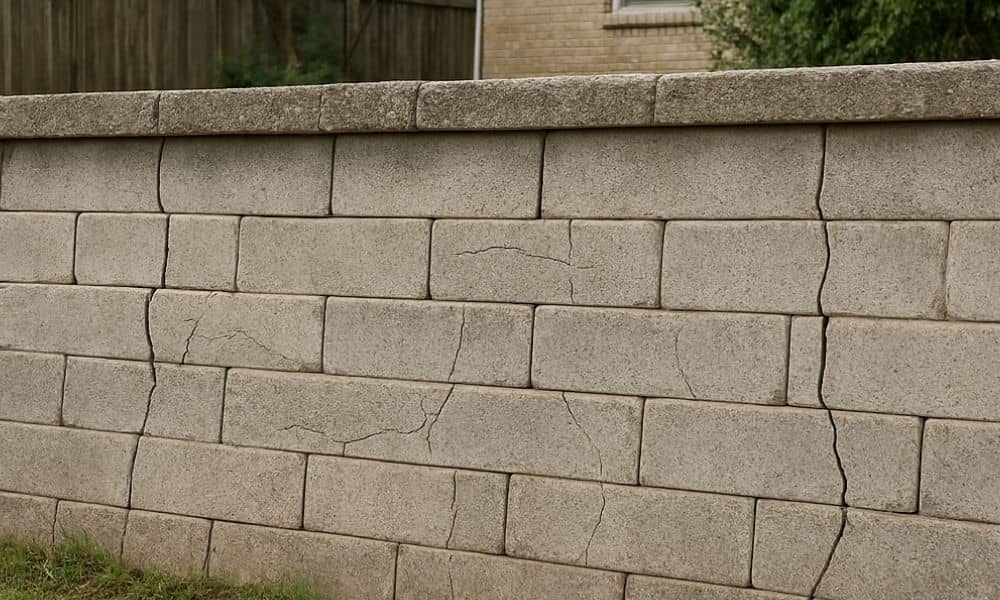
Sometimes a news story from far away hits close to home. A few days ago, a deadly wall collapse in Dibrugarh, India shocked an entire community. A woman lost her life when the side of an illegally built five-story building gave way. Even worse, people had already raised concerns about the structure, but nothing happened until it was too late. The entire building has now been demolished.
This tragedy feels distant, but the message is simple and relevant for homeowners. A retaining wall can hide risks long before anything looks wrong. And because it protects your yard, your home, and the people around you, paying attention early makes a huge difference.
When walls fail, it rarely happens without warning. There are always signals—social signals, missing paperwork, and responsibility gaps—that show trouble long before cracks ever appear. In Madison and Huntsville, where storms hit hard and many homes have older retaining walls, ignoring those early clues can lead to serious danger. This news story gives us a chance to look closely at the walls we live with every day.
People Ignore Warnings Long Before a Wall Fails
The collapse abroad didn’t happen out of nowhere. The problem was not only weak construction but the pattern of ignored warnings. Neighbors saw strange changes. Some raised concerns. Officials knew the building had issues. Yet no one acted fast enough.
Homeowners often do the same thing. Maybe we notice something unusual about a wall but choose to deal with it later. Maybe we trust that the last owner built it correctly. Or maybe a contractor shrugs off our questions, and we let it slide because the wall “looks fine.” But many times, the person who finally points out the real issue is a masonry contractor, simply because they look at walls every day and notice details the rest of us miss.
These small moments create blind spots. A wall standing day after day feels safe, even when it isn’t. It doesn’t need to lean or crack to be risky. Sometimes the biggest threats hide in things we cannot see—like missing records, unknown workmanship, and years without inspection.
Hidden Risks You Can’t Spot at First Glance
Many guides talk about cracks or leaning, but those are not the only dangers. The most serious risks often have nothing to do with how the wall looks.
Walls with no permits or records create uncertainty. Many homes have retaining walls built decades ago with no documentation at all. Without records, the design, reinforcement, or purpose of the wall is a mystery.
DIY walls from past owners also add risk. A wall may appear strong while hiding major shortcuts under the surface. People mean well, but weekend projects don’t always follow long-term safety standards.
Extra weight added above the wall later can overwhelm its original design. Parking pads, sheds, patios, and even heavy landscaping all change how much pressure the wall must hold.
Shared or unclear ownership can also create problems. When a wall sits between two properties, each side assumes the other is responsible. This leads to long periods without maintenance or inspections—one of the same issues seen in global collapse cases.
These risks stay invisible until something triggers them, which is why awareness matters so much.
Warning Signs You Notice Without Seeing Damage
Instead of looking for cracks, think about the collapse story. People noticed strange things. People felt unsure. People spoke up. The problem was the response.
You don’t need engineering skills to catch early warning signs. You only need to pay attention to the story behind your wall.
If simple questions get vague answers, that’s a warning. A strong wall always has a clear history. If nobody can explain how the wall handles water, that is another clue something might be wrong. If neighbors say, “It’s always been like that,” it may mean a real issue has been ignored for years.
Walls also need regular checks, even if they look fine. When no one has inspected your retaining wall for a decade or more, that silence becomes a risk by itself. Strong structures still need care, and forgetting about them creates the same kind of neglect that contributed to the collapse overseas.
Even your own uncertainty matters. If something feels off—even if the wall appears normal—that feeling often means it’s time to look deeper.
A Better Way to Understand Your Retaining Wall
You don’t need tools or a checklist. You just need to ask the right questions about the wall’s story.
When was it built? Who built it? Why was it needed? Was an engineer involved? Has anything heavy been added above it since? Is anyone responsible for checking it? If the answer to most of these questions is “I’m not sure,” then the wall may have risks that simply haven’t shown themselves yet.
Walk around your yard and focus on how the wall fits into the space. Does it hold up a steep slope? Does it sit under a driveway or patio? Does it support a neighbor’s yard? These simple observations reveal more about risk than staring at bricks or blocks.
The goal isn’t to find flaws. The goal is to understand the wall better than you did before.
Storms Reveal Weakness, They Don’t Create It
Madison storms hit hard, but they rarely cause a failure on their own. Instead, storms expose hidden mistakes made years earlier. Water adds pressure. Wind shakes the ground. Soil shifts. If a wall already has unseen problems, these forces reveal them fast.
This is why the collapse abroad matters. That building stood for years. Only when repeated stress built up did the weakness finally show. The same thing happens with aging retaining walls on local properties.
A wall that “has always been fine” can fail the moment it faces a strong enough test. Understanding the history and the hidden risks helps prevent that moment from becoming a crisis.
Take Action Before Doubt Becomes Danger
You don’t need to panic or tear anything down. You only need to pay attention. If something about your retaining wall feels uncertain—its history, its purpose, or the way it was built—use that feeling as a signal.
Ask a local masonry expert to take a look. A simple review brings clarity and safety. Instead of guessing, you’ll know exactly what you’re dealing with.
The collapse abroad was a tragedy, but it left homeowners everywhere with a powerful reminder: danger starts with doubt, not damage. Don’t ignore the quiet warnings. Your retaining wall protects your home, your yard, and your family. Giving it the attention it deserves is the best way to keep everyone safe.
If you’re in Madison or Huntsville and want a professional to review your retaining wall, reach out anytime. A quick check today can prevent a costly or dangerous problem tomorrow.