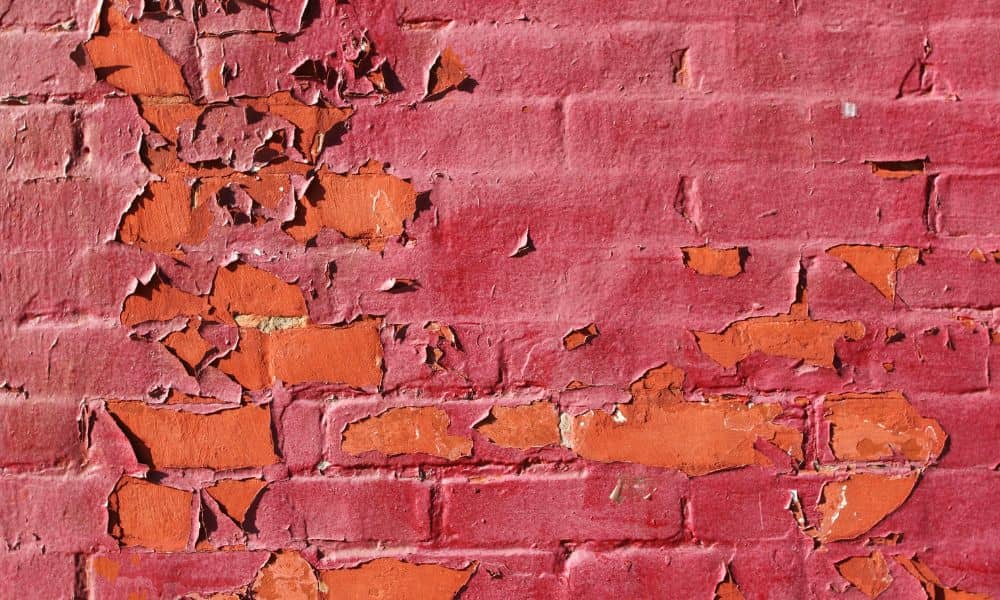
Painted brick has become a popular choice for homeowners who want a clean, modern look. It feels fresh, updated, and eye-catching. However, once brick is painted, it no longer behaves the way it was designed to. Painted brick can trap moisture inside the wall, and that trapped moisture often causes damage long before major cracks or repairs appear.
The challenge is that the early signs look small. A bit of white residue. Paint that bubbles slightly. Brick that stays dark longer after rain. These details are easy to ignore. Yet they often signal moisture problems already at work behind the surface.
Painted Brick Doesn’t Fail — Moisture Does
Brick is naturally porous. It absorbs water when it rains and releases that moisture as conditions dry. This slow exchange keeps the wall stable and healthy.
Once brick is painted, that balance changes. Paint seals the surface and limits how moisture escapes. As a result, water that enters the wall must find new exit points. When it can’t, pressure builds inside the brick veneer. Over time, that pressure leads to mortar breakdown, brick damage, and paint failure.
In places like Madison, Alabama, this happens more quickly. High humidity, frequent rain, and warm temperatures create the perfect conditions for trapped moisture to linger.
The First Warning Sign: Efflorescence on Painted Brick
One of the most common early clues is efflorescence. This shows up as a white, chalky powder on the surface of brick or mortar joints.
Efflorescence forms when water moves through masonry and carries salts to the surface. When the water evaporates, the salts remain behind. On painted brick, this often means moisture is struggling to escape normally.
A single appearance may not be serious. However, repeated efflorescence almost always points to ongoing moisture movement inside the wall. It does not mean the brick itself is defective. Instead, it signals that water is traveling where it shouldn’t.
Why Painted Brick Changes Moisture Movement
Unpainted brick releases moisture across its entire surface. Painted brick cannot. Because of that, water gets pushed toward the weakest paths available.
Most often, moisture tries to escape through mortar joints, tiny surface cracks, or areas around windows and doors. As moisture concentrates in these spots, damage accelerates. Mortar begins to soften. Brick faces may start to flake. Paint bubbles or peels as pressure builds underneath.
What you see on the surface usually reflects a deeper issue happening behind the wall.
Where the Moisture Is Really Coming From
In most cases, moisture problems do not start with the brick itself. Instead, they begin with common exterior details that repeatedly introduce water.
Sprinklers and irrigation systems are a frequent cause. When water sprays against painted brick every day, the wall stays wet longer than it should. Over time, moisture builds inside the veneer, especially near the foundation.
Gutters and downspouts also play a major role. Overflowing gutters dump water behind the brick. Short downspouts cause splashback against the wall. Painted brick dries slowly, so repeated exposure creates a constant moisture source.
Windows, lintels, and flashing are another common entry point. When flashing fails or goes missing, water slips behind the brick veneer. Paint often hides these early leaks, allowing damage to grow quietly.
Why Weep Holes Matter More on Painted Brick
Weep holes are small openings near the bottom of brick veneer walls. They allow trapped water to drain out and let air circulate behind the brick.
On painted brick homes, these openings become even more important. Paint can seal them shut. Mortar can block them. Landscaping can cover them. When that happens, moisture has nowhere to go.
As water builds behind the wall, pressure increases. Efflorescence, peeling paint, and mortar damage often appear just above the foundation line. Many homeowners overlook this detail, yet it plays a major role in preventing hidden damage.
How to Check Weep Holes in Under a Minute
You can spot potential problems with a quick visual check. Walk along the base of your brick wall and look for small gaps between bricks. These are weep holes.
If you see paint covering them, that’s a warning sign. If mortar fills them in, that’s another concern. Also watch for staining or peeling paint directly above these areas. These patterns often point to trapped moisture behind the brick.
The One-Hose Test: A Simple Way to Spot Trapped Moisture
Another useful screening tool involves a garden hose. Choose a dry day. Lightly wet one small section of the wall for a few minutes. Then stop and observe.
If the area dries evenly, moisture likely escapes as expected. However, if dark patches linger, streaks form, or white residue appears as it dries, moisture may be trapped inside the wall.
This test does not replace a professional inspection. Still, it often reveals early warning signs that homeowners would otherwise miss.
When Efflorescence Is Harmless — and When It’s a Warning
Not every case of efflorescence signals serious damage. Context matters.
Cleaning may be enough if the residue appears once, mortar joints remain firm, and brick faces stay intact. In these cases, moisture exposure was likely brief.
However, repeated efflorescence deserves attention. If mortar feels soft, paint bubbles or peels, or brick surfaces begin to flake, moisture pressure is likely ongoing. At that point, inspection becomes important to prevent deeper damage.
Why Quick Fixes Often Make Painted Brick Problems Worse
Many homeowners try sealing, repainting, or power washing when problems appear. Unfortunately, these quick fixes often trap more moisture inside the wall.
Hard mortar repairs can also cause damage by stressing softer brick. High-pressure washing forces water deeper into the veneer. Instead of solving the problem, these steps usually speed up deterioration.
Moisture control must come first. Here, less intervention often protects the wall better than aggressive action.
What to Do Next If You Own Painted Brick
Painted brick does not guarantee failure. It simply means the wall needs closer attention. Check moisture sources once a year. Keep weep holes open and visible. Watch for recurring white residue, peeling paint, or soft mortar.
When signs repeat, contact a local masonry professional who understands brick veneer systems and regional conditions. Early guidance can prevent costly repairs later.
Painted brick problems grow quietly. Yet when you know what to look for, you stay ahead of the damage and protect your home for the long term.