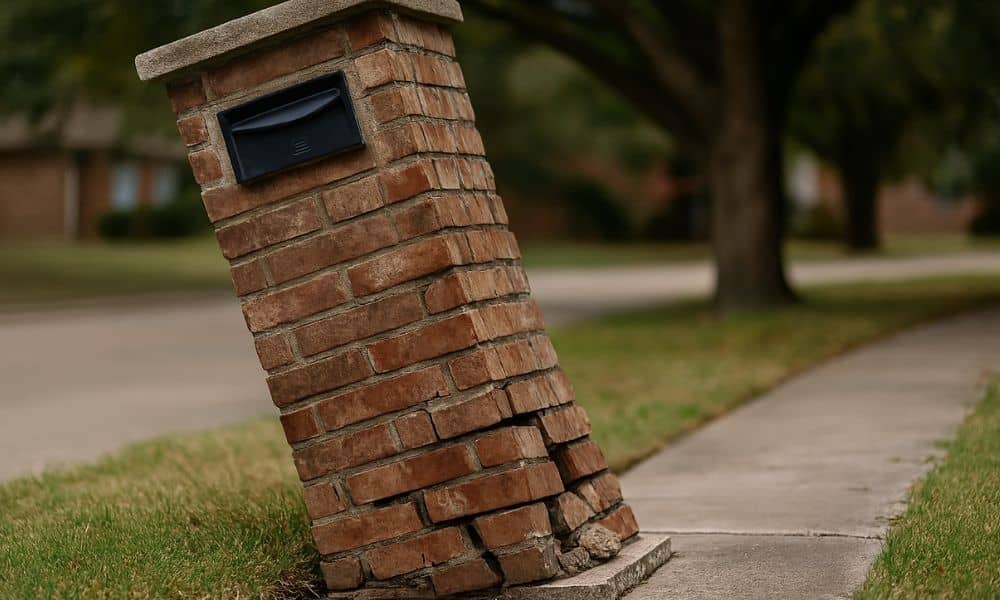
Mailbox repair often sounds simple. A loose brick here, cracked mortar there, and everything should be fine again. However, many homeowners learn the hard way that some mailbox problems go deeper than the surface. In fact, mailbox repair sometimes reaches a point where it no longer works, no matter how well it’s done. When that happens, full masonry replacement becomes the smarter and more cost-effective choice.
Why Mailbox Repair Feels Like the Right First Step
Most people start with repair because it feels logical. After all, if only a few bricks look damaged, why rebuild the whole thing? In many cases, repair is the right call. Mortar joints wear down over time. Small cracks appear. Weather exposure takes its toll. When the structure underneath remains solid, these issues respond well to proper masonry repair.
However, problems begin when the damage goes beyond what repair can hold together. At that point, even skilled work cannot stop movement or failure.
The Hidden Line Between Repairable and Structural Damage
Masonry works as a system. Bricks, mortar, reinforcement, and the base all share the load. Once one part fails, stress shifts to the rest. As a result, surface fixes stop lasting.
Mailbox repair handles surface problems. Replacement addresses structural ones. The challenge lies in knowing where that line sits.
For example, fresh mortar cannot stabilize a mailbox if the base continues to move. Likewise, replacing cracked joints does nothing if bricks themselves have fractured under stress. In those cases, repair only hides the issue for a short time.
When Mailbox Repair Still Works
Mailbox repair remains effective when the structure stays stable. That means the mailbox still stands straight, the base holds firm, and the bricks remain intact.
In these situations, repair often solves the problem:
- Mortar loss stays shallow
- Cracks run along joints, not through bricks
- No separation appears at the base
- The mailbox stays plumb when checked with a level
When these conditions exist, repair strengthens the structure and extends its life.
Signs Repair Will Not Hold
Some warning signs show up clearly once you know what to look for. These signs indicate that mailbox repair will likely fail again.
First, repaired mortar cracks reappear within months. That tells you the structure still moves. Second, bricks split through their faces rather than along joints. Brick cracks signal stress the material can no longer handle. Third, the mailbox continues leaning even after earlier repairs. Movement always wins against mortar.
Also, watch the base closely. If gaps form where the mailbox meets the ground or concrete, the footing has likely shifted. In that case, surface repair cannot restore stability.
Why Repeating Mailbox Repair Costs More Over Time
At first glance, repair costs less than replacement. However, repeated repairs add up quickly. Each repair involves labor, materials, and cleanup. Meanwhile, the underlying problem remains.
Over time, homeowners often spend more chasing repairs than they would rebuild once. Even worse, repeated failure damages surrounding bricks, which raises the final replacement cost.
Because of this, experienced masons often advise replacement once structural movement appears. They know repair will not last, and they avoid work that fails again.
How Masons Decide Between Repair and Replacement
A professional mason does not guess. Instead, they evaluate several factors on site.
They check whether the mailbox stands plumb. They test mortar depth and firmness. They examine bricks for internal cracking. They inspect the base for rotation or settlement. Finally, they look for signs of internal reinforcement failure.
Together, these checks reveal whether mailbox repair can succeed or if replacement offers the only durable fix. This process protects both the homeowner and the mason.
What Full Masonry Replacement Actually Fixes
Replacement does more than make the mailbox look new. It resets the structure from the ground up.
A proper replacement includes:
- A stable footing set at the right depth
- Reinforcement that resists movement
- Correct load transfer through the structure
- Long-term resistance to shifting and cracking
Once rebuilt correctly, the mailbox no longer relies on surface patches to stay upright. Instead, it stands on a solid foundation designed to last.
Why Replacement Often Feels Like an Upsell (But Isn’t)
Many homeowners worry that replacement recommendations aim to increase cost. That concern makes sense. However, replacement often prevents future spending rather than creating it.
When a mailbox crosses the structural threshold, repair becomes temporary by nature. Replacement removes uncertainty. It also reduces long-term maintenance and avoids repeated disruptions.
Understanding this difference helps homeowners make informed decisions rather than reacting to surprise quotes.
Making the Right Decision Before Spending More
Before approving another mailbox repair, ask one simple question: will this stop movement or only cover it? If the answer leans toward covering, replacement deserves serious consideration.
A clear evaluation helps prevent wasted money and frustration. Even if replacement costs more upfront, it often delivers better value over time.
Final Thoughts
Mailbox repair works well when the structure beneath it remains sound. However, once movement, cracking, or base failure begins, repair loses its effectiveness. At that point, full masonry replacement becomes the smarter path forward.
Knowing the difference helps homeowners protect their investment and avoid repeating the same fixes. With the right approach, your mailbox can return to being a stable, lasting feature instead of an ongoing problem.