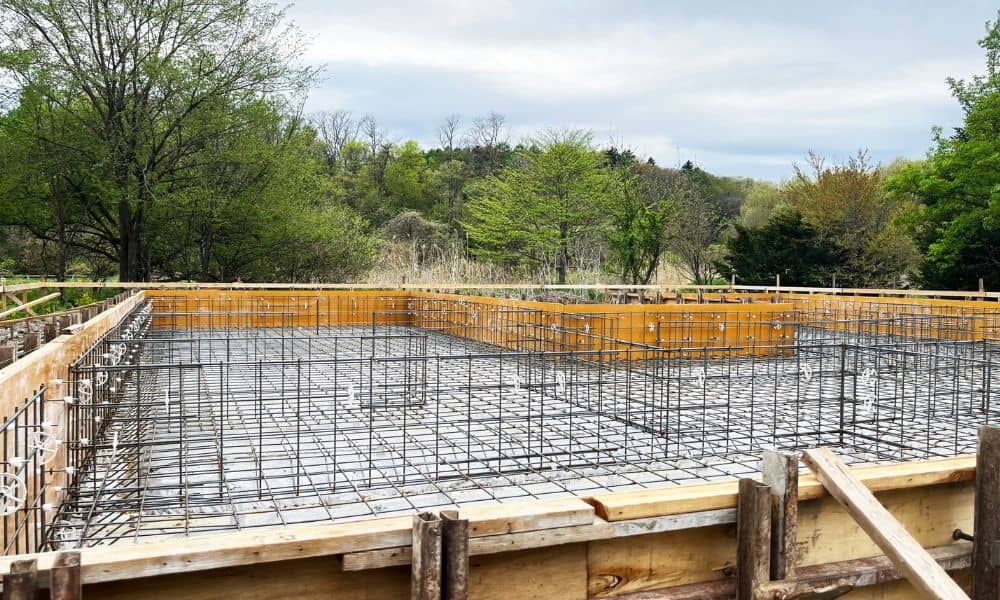
A brick fireplace feels solid and permanent. It looks like something that should last forever. However, in Huntsville, many fireplace problems do not start in the brick at all. Instead, they begin below the floor, hidden in the soil. When footing depth does not match local ground conditions, small shifts slowly turn into visible damage. By the time cracks appear, the real issue has already been at work for years.
Why Brick Fireplaces Depend on What’s Below Them
A brick fireplace weighs far more than most features inside a home. Brick, mortar, and the hearth all push straight down into the ground. Unlike a wall that spreads weight over a long stretch, a fireplace concentrates its load in one small area.
Because of that, the footing under a brick fireplace carries serious responsibility. It must spread the weight evenly and keep the structure stable as the ground reacts over time. When that footing is too shallow or poorly prepared, the soil takes the hit first. Eventually, the fireplace shows the damage.
How Clay Soil Affects Fireplace Foundations
Huntsville sits on clay-heavy soil. Clay behaves differently than sand or loam. It compresses unevenly under weight, especially when the load stays in one place for years. While the rest of the home may settle evenly, a brick fireplace often sinks or shifts on its own.
Additionally, clay does not forgive shortcuts. If the soil under the footing is not compacted well, weak pockets remain. Over time, the footing presses into those spots. As a result, the fireplace starts to move even when the rest of the floor looks fine.
That uneven movement creates stress. Brick does not bend, so it responds by cracking or pulling apart.
Why Footing Depth Matters More Than Most Homeowners Realize
Footing depth controls how well weight spreads into the soil. A shallow footing pushes weight straight down into a narrow area. On clay soil, that pressure causes compression and settling. Meanwhile, a deeper footing spreads the load across more soil, reducing movement.
Many older homes and quick builds used footing depths that worked “well enough” at first. However, clay soil changes slowly. Years later, the fireplace begins to show signs of trouble even though nothing else has changed.
Because of that delay, homeowners often assume the issue came from age or normal wear. In reality, the problem started the day the footing was poured.
What Fails First When the Footing Is Wrong
The earliest failures are subtle. They do not look serious at first, which is why many people ignore them.
One of the first signs appears at the hearth. The hearth may separate slightly from the surrounding floor. At first, it looks like a small gap. Over time, that gap widens as the footing continues to settle.
Next, cracks often appear where the fireplace meets the wall. These cracks usually run vertically. They signal that the fireplace is moving independently from the house framing.
Eventually, the face of the fireplace may begin to pull forward or tilt slightly. At this stage, repairs become more complex because the structure itself has shifted.
These are structural warnings, not cosmetic flaws. Covering them up does not stop the movement below.
Why Surface Repairs Rarely Last
Many homeowners try simple fixes first. They fill cracks, reset loose brick, or touch up mortar joints. At first, those repairs seem to work. The fireplace looks better, and the problem feels solved.
However, when the footing underneath keeps shifting, those fixes don’t stand a chance. The base never changed, so the fireplace continues to settle, and the brick above it reacts the same way it did before. Over time, the cracks return, often in the exact same spots. That’s usually when homeowners realize they need more than surface work and start looking for masonry solutions that deal with the cause instead of the symptoms.
In some cases, repeating small repairs actually makes the final fix harder. Old patchwork has to be removed before structural work can begin, which adds time and cost that could have been avoided earlier.
Evaluating a Brick Fireplace Before Building or Rebuilding
Whether you are planning a new brick fireplace or repairing an existing one, footing evaluation matters. The footing must match the size and weight of the fireplace, not just general guidelines.
Depth and width both matter. A wider footing spreads weight better. Meanwhile, deeper footings reach more stable soil. Compaction under the footing also plays a major role. Loose soil under concrete creates future movement no matter how thick the footing looks.
The transition between the footing and the home’s slab also needs attention. If that joint shifts, cracks follow. Proper planning at this stage prevents problems that no surface repair can fix later.
When Structural Correction Becomes Necessary
Not every issue requires a full rebuild. Some fireplaces settle and then stop moving. Others continue to shift year after year. Knowing the difference saves time and money.
If movement is active, repairs above the footing will not hold. In that case, stabilization or partial rebuilding may be needed. However, when settlement has stopped, targeted structural correction may be enough.
A skilled masonry professional can determine whether the footing still moves or if the damage has stabilized. That decision guides the repair plan and prevents unnecessary work.
Why Local Experience Matters
Clay soil varies by region. What works in one area may fail in another. Because Huntsville has unique soil conditions, footing design must reflect local experience.
Generic construction standards often overlook how concentrated loads behave on clay. Local masons understand where problems appear first and how to prevent them. That knowledge comes from seeing the same failures again and again.
Choosing someone familiar with soil conditions reduces risk. It also ensures that repairs address the cause, not just the symptoms.
Build the Base Right, and the Fireplace Follows
A brick fireplace should feel permanent. When built on the right footing, it usually is. Most long-term problems trace back to what lies beneath the surface, not the brick itself.
Ignoring footing depth leads to repeated repairs, widening cracks, and rising costs. On the other hand, proper planning creates stability that lasts for decades.
If you want a brick fireplace that holds its place year after year, start at the bottom. When the footing is right, everything above it has a chance to stay right too.