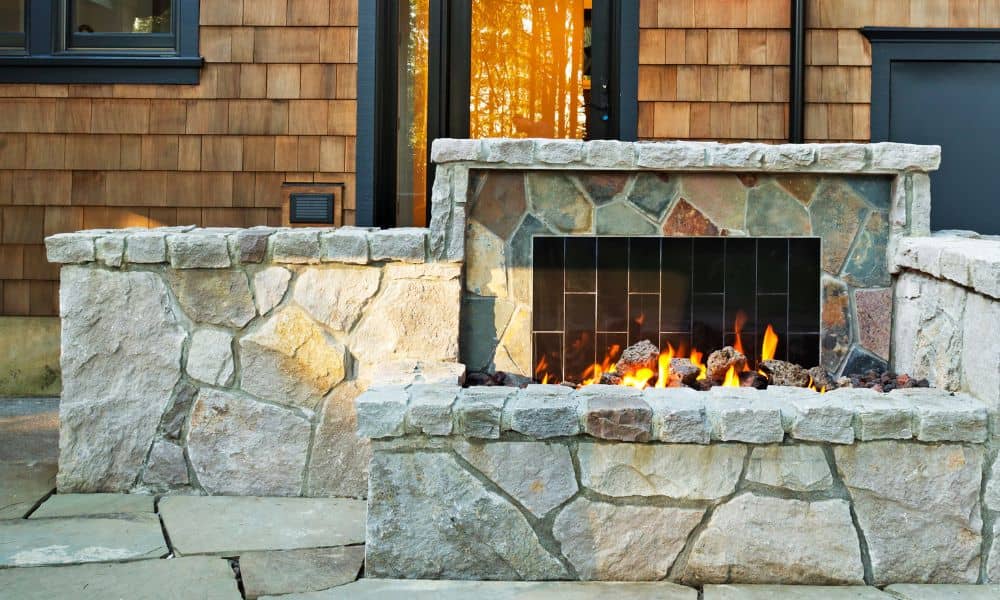
An outdoor fireplace can turn a backyard into the favorite gathering spot in your home. In Madison, many homeowners plan these features to enjoy cool evenings, host friends, or add long-term value to their property. However, before you think about stone patterns or seating, there’s one thing that matters more than anything else: local code compliance.
Designing an outdoor fireplace that passes inspection is not complicated, but it does require planning. When homeowners skip this step, projects get delayed, redesigned, or even torn down. This guide walks you through the most important code-related decisions—firebox size, stone choice, and setbacks—so you can design with confidence from the start.
Why Code-First Design Matters
Many outdoor fireplace problems start with inspiration photos. While these images look great, they rarely reflect local building rules. In Madison, permanent outdoor fireplaces fall under residential building codes. That means inspectors review how and where they are built.
When code comes last, homeowners often face three issues. First, permits get delayed. Second, changes increase costs. Finally, inspections fail after construction begins. Planning with code in mind helps avoid all three.
More importantly, a code-compliant outdoor fireplace protects your home, your family, and your investment. It also makes future resale easier since buyers and inspectors look closely at permanent outdoor structures.
Which Outdoor Fireplaces Must Follow Code
Not every fire feature is regulated the same way. Temporary fire pits and portable units usually fall outside strict requirements. However, a masonry outdoor fireplace built on a footing almost always requires permits and inspections.
In Madison, outdoor fireplaces count as permanent structures when they include:
- Masonry construction
- A fixed firebox
- A chimney or vent
- A permanent gas or wood-burning setup
If your plan includes brick or stone and stays in place year-round, assume code applies. Designing with that assumption saves time later.
Firebox Size: The First Decision That Affects Everything
The firebox is the heart of an outdoor fireplace. Its size affects safety, clearances, and approval. Many homeowners assume bigger is better, but that approach often causes problems.
Local code limits firebox size to control heat output and smoke movement. Oversized fireboxes create drafting issues and raise clearance concerns. On the other hand, undersized fireboxes may not meet minimum functional requirements.
Before design begins, the firebox size must be defined. That measurement affects:
- How far the fireplace must sit from structures
- Whether a chimney or vent is required
- How inspectors evaluate the plan
Changing the firebox size later often forces a full redesign. Starting with correct dimensions keeps the project moving smoothly.
Stone Choice From a Code Perspective
Stone choice often feels like a design decision, but code plays a role here as well. Inspectors care less about color and more about how the stone functions near heat.
In outdoor fireplaces, stone falls into two categories:
- Structural stone
- Decorative veneer
Structural stone supports weight and handles heat. Decorative veneer does not. Code requires heat-rated materials around the firebox opening and other high-temperature zones.
Problems occur when homeowners choose stone that looks great but lacks proper ratings. Inspectors may ask for documentation showing that materials can handle heat exposure. Without it, approval stalls.
Choosing stone early and confirming its intended use prevents last-minute material swaps and delays.
Setbacks: The Rule That Controls Placement
Setbacks cause more design changes than any other rule. A setback defines how far a structure must sit from other elements on your property. In Madison, setbacks protect homes, property lines, and neighboring structures.
Outdoor fireplace setbacks usually apply to:
- The main house
- Property lines
- Pools and patios
- Fences and accessory buildings
These distances shape where an outdoor fireplace can legally exist. Many homeowners design a perfect layout, only to learn later that the fireplace sits too close to a structure.
Checking setbacks before finalizing placement avoids frustration. It also keeps inspectors satisfied when plans reach review.
How Fireplace Type Changes Code Requirements
Not all outdoor fireplaces follow the same rules. Fuel type plays a major role in approval.
Wood-burning fireplaces often require:
- Larger clearances
- Defined firebox dimensions
- Chimney height considerations
Gas fireplaces usually involve:
- Specific venting rules
- Shutoff access
- Clearance from ignition sources
Switching fuel types mid-project creates setbacks and redesigns. Choosing the type early helps align firebox size, stone placement, and location with code expectations.
When Outdoor Fireplaces Connect to Outdoor Kitchens
Outdoor fireplaces often sit near outdoor kitchens. While this creates a great gathering space, it also adds complexity.
When fireplaces and kitchens combine, code may require:
- Additional clearances
- Separation between heat sources
- Planning around gas lines and appliances
Designing both features together helps avoid conflicts. Inspectors prefer clear layouts that show how each element functions safely within the space.
What Inspectors Expect to See
Inspectors focus on clarity and consistency. They want to see:
- Defined firebox dimensions
- Labeled materials
- Clear setback measurements
- A layout that matches the permit application
Missing details slow approval. Clear planning speeds it up. When plans show how the outdoor fireplace meets code, inspections move faster and with fewer revisions.
Why Professional Planning Makes a Difference
Experienced masonry professionals understand how code affects design. They plan firebox size, stone placement, and setbacks together instead of treating them as separate steps.
This approach saves time and money. It also reduces stress for homeowners who want the project done right the first time.
Final Thoughts
Designing an outdoor fireplace starts with understanding local code. Firebox size, stone choice, and setbacks shape every decision that follows. When these elements come first, the project stays on track.
A code-compliant outdoor fireplace does more than pass inspection. It gives you peace of mind and a backyard feature you can enjoy for years. With careful planning, your fireplace becomes a lasting part of your home—not a costly lesson.