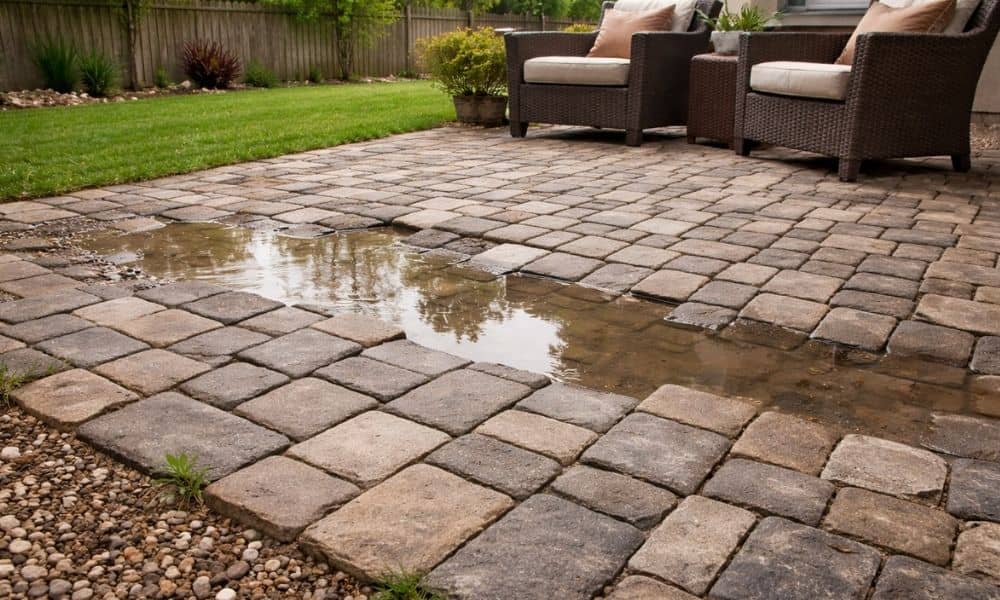
Stone pavers are one of the most popular choices for patios, walkways, and outdoor living spaces. They look timeless, feel solid underfoot, and add real value to a home. Yet many homeowners notice a frustrating pattern: the patio looks great at first, then slowly starts to shift, dip, or hold water.
This usually isn’t a stone problem. Instead, it’s a soil problem.
In areas like Madison and the surrounding region, clay-heavy soil creates challenges that stone pavers must be built for. When installation ignores how this soil behaves, problems show up sooner or later.
Why Stone Pavers Often Look Fine at First
Many patios fail quietly. For the first few months, everything seems solid. The stones stay level. The joints look clean. Water drains well enough.
Then the seasons change.
North Alabama clay holds moisture for a long time after rain. As that moisture builds up, the soil softens and expands. When things dry out, the soil tightens and shrinks again. This cycle keeps repeating. Over time, it creates movement under the pavers.
Because this movement happens below the surface, homeowners don’t see it right away. Instead, the first signs appear later—usually after a stretch of heavy rain or during the first winter.
The Real Challenge: Clay Soil Beneath Stone Pavers
Clay soil behaves very differently from sandy or loamy ground. It does not drain quickly. It also does not stay stable when moisture levels change.
When stone pavers sit over clay that stays wet, the base beneath them loses strength. As a result, weight from foot traffic or furniture pushes the stones down unevenly. Later, when the soil dries, voids form under the base. The pavers no longer have even support.
This is why stone pavers installed without accounting for clay soil often rock, tilt, or settle unevenly. The stones themselves remain strong. The ground beneath them does not.
What Goes Wrong Below the Surface
Most stone paver failures start with what you cannot see.
In many installations, the base layer looks solid on day one. However, problems develop when the base is too thin, uneven, or contaminated by clay over time. As moisture moves upward, fine clay particles mix into the base material. This weakens its structure and reduces drainage.
Once this happens, surface fixes rarely work. Adding sand to joints or resetting a few stones may help briefly. Still, the underlying movement continues. Eventually, the same problems return.
That’s why proper preparation below the surface matters more than the pattern or color of the stone pavers.
Why Flat-Looking Stone Pavers Can Be a Red Flag
A perfectly flat patio may look appealing. However, in North Alabama, that can signal trouble.
Stone pavers need subtle pitch to move water away from the structure and off the surface. When a patio looks flat but lacks proper pitch, water finds its way underneath. Since clay soil drains slowly, that water stays trapped.
Over time, trapped moisture softens the soil and weakens the base. As a result, the stones begin to settle unevenly. Small dips form, which then collect more water. This cycle keeps building until the surface no longer drains at all.
The key is not visible slope. It is a functional water movement.
Edge Movement: The First Warning Sign
In clay soil, edge movement often appears before problems show up in the center.
Edges take the most pressure because there is less surrounding support. When clay expands and contracts, it pushes outward. If the edges shift even slightly, the entire stone paver system starts to loosen.
Homeowners often overlook this early sign. A small gap near the border does not seem serious at first. Yet once the edge moves, interior stones begin to follow. Eventually, the whole patio feels unstable.
Catching edge movement early can prevent larger failures later.
When Stone Paver Issues Can Be Fixed
Not every problem requires a full rebuild. In some cases, targeted corrections work well.
If the movement is limited to certain areas, resetting sections after correcting the base can restore stability. Improving how water exits the patio area can also reduce future stress on the soil.
However, some fixes only hide the real issue. Surface-level repairs without addressing what’s happening below rarely last. When widespread settling or drainage problems exist, deeper correction becomes necessary.
Knowing the difference saves time, money, and frustration.
Seasonal Stress Makes Problems Worse Over Time
North Alabama weather adds pressure year after year.
Spring brings heavy rain that saturates clay soil. Summer heat dries it out and causes contraction. Winter introduces freeze-thaw cycles that push stones upward, even when temperatures stay mild.
Each season adds stress to stone pavers installed without proper soil planning. Over time, small issues grow into visible damage. That’s why patios that “worked fine for years” can suddenly fail after one rough season.
How Homeowners Can Spot Trouble Early
You don’t need to remove stone pavers to notice warning signs.
After a rain, watch where water collects and how long it takes to dry. Pay attention to joints that widen or wash out. Look closely at edges and borders for subtle shifts. Notice if stones rock slightly when you walk across them.
These clues often appear long before major damage. Addressing them early keeps repairs simpler and more affordable.
Why Local Knowledge Matters for Stone Pavers
Installation methods that work in other regions do not always succeed here. North Alabama clay behaves differently, especially after heavy rain, and that changes how stone pavers need to be installed.
Local experience matters because it comes from seeing the same problems happen again and again on real properties. Over time, patterns become clear—where water tends to collect, how soil shifts through the seasons, and which installation details actually hold up. Homeowners often learn this the hard way, while crews who work locally see it every day.
That’s why many people choose to work with trusted stone masonry services that are familiar with local soil conditions and understand how to build stone pavers so they stay stable long after the job is finished.
Final Thoughts
Stone pavers remain an excellent choice for outdoor spaces. Their durability and natural beauty still make them a smart investment.
The key is building for the soil beneath them.
When installation respects how clay behaves, stone pavers stay level, drain properly, and hold up through changing seasons. When it doesn’t, problems appear slowly but surely.
If your patio shows early signs of movement, addressing them sooner rather than later makes all the difference.