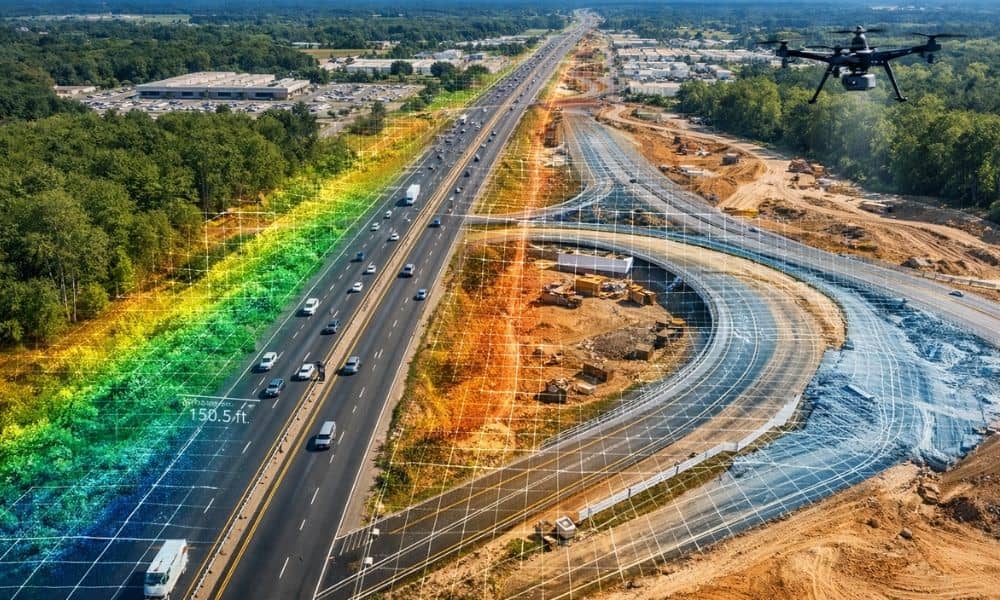
Transportation projects around Dothan keep moving forward. Roads expand. Intersections get redesigned. Access points change. New commercial sites connect to highways. However, every one of those upgrades depends on one thing first — accurate ground data. Before engineers draw road lines or plan drainage, they need a clear picture of the land. That is where lidar mapping plays a major role. It gives planning teams detailed elevation and terrain data across long road corridors, not just single parcels. As a result, transportation projects start with fewer unknowns and fewer costly surprises.
Transportation Planning Starts Earlier Than Most People Think
Most people notice transportation projects when cones show up and lanes close. However, planning starts years earlier. Regional planning groups and engineering teams study traffic flow, safety risks, and future growth long before construction begins.
First, they review corridor conditions. Next, they compare route options. Then, they test design ideas against real terrain data.
If that early data has gaps, the design can go off track. That leads to revisions, delays, and budget problems later. Therefore, planners now rely more on detailed terrain models across full corridors instead of scattered survey points.
That shift explains why corridor-scale LiDAR mapping now supports many transportation studies.
Corridor Mapping Is Different From Normal Site Surveys
A typical property survey focuses on one parcel. A transportation project, on the other hand, follows a long path. It may stretch for miles across mixed terrain, roadside ditches, slopes, and drive entrances.
Because of that, corridor mapping must show continuous elevation changes — not just separate points.
For example, a small elevation change at a driveway can affect how cars enter and exit. Likewise, a shallow roadside ditch can change how stormwater flows after heavy rain. Small ground details matter more when roads connect to many properties.
With corridor-focused lidar mapping dothan, engineers can review those elevation patterns across the full route instead of guessing between points.
Better Terrain Data Leads to Better Road Decisions
Transportation design teams make many early choices that shape the final project. They choose intersection layouts. They test turn lanes. They check sight distance. They review roadside grading.
Each choice depends on ground shape.
When terrain models lack detail, engineers must guess. Guessing often leads to redesign. Redesign adds cost and time.
However, when teams use dense LiDAR terrain data early, they can:
- Check slope changes
- Review shoulder grades
- Spot drainage paths
- Compare route options
- Estimate earthwork ranges
As a result, design choices stay more stable from the start.
Access and Driveway Impacts Affect Nearby Properties
Road improvements do not stop at the edge of the pavement. They often affect nearby parcels too. That creates real concerns for business owners and developers.
For example, a road grade change may raise the curb. That can create driveway slope problems. In other cases, ditch changes can send water toward or away from a site.
Therefore, property owners near planned transportation upgrades should understand ground conditions early. LiDAR-based corridor mapping helps teams check those edge areas before final design.
That early review helps prevent access redesign after permits get filed.
Timing Matters in Transportation Projects
Transportation teams do not wait until final design to collect terrain data. Instead, they gather strong surface models during early planning stages.
Teams often order corridor LiDAR during:
- Route studies
- Alignment comparisons
- Early engineering
- Pre-construction checks
Each stage uses terrain data in a different way. First, planners compare options. Later, engineers refine grades. Finally, builders verify surface conditions.
Because lidar mapping dothan support each phase, it reduces data gaps between planning and construction.
Corridor LiDAR Supports Drainage and Earthwork Planning
Road projects always include drainage design. Water must move away from roads and structures safely. That requires accurate ground shape models.
Drainage depends on small elevation changes. Even minor ground breaks can change water flow.
With detailed corridor LiDAR surfaces, engineers can track how water moves along slopes and ditches. They can also estimate cut and fill zones earlier. That improves earthwork budgets and work plans.
As a result, teams avoid late drainage redesign — one of the most common causes of delay.
Faster Reviews and Fewer Redesign Cycles
Transportation projects pass through several review steps. Agencies check safety, grading, drainage, and access effects. Each review can lead to design edits.
When base terrain data stays strong, reviewers trust the grading model more. That reduces back-and-forth changes.
In contrast, weak mapping often brings requests for new checks or added field work. That slows approval.
Therefore, strong corridor LiDAR data helps projects move through reviews with fewer resets.
Why This Matters for Developers and Project Owners
Even if you are not building the road, transportation upgrades can affect your project. Road grade changes can affect access permits. Drainage changes can affect stormwater plans. Alignment shifts can affect frontage layout.
Because of that, developers benefit when planning teams use detailed corridor terrain models early. It creates more predictable design results near project sites.
If your property sits near a planned improvement area, early terrain data can protect your schedule and budget.
The Big Picture
Transportation projects succeed when design teams understand the ground clearly from the start. Corridor-scale terrain data now plays a bigger role than ever.
That is why lidar mapping matters for upcoming transportation projects. It supports better early choices, steadier designs, and smoother approvals. Just as important, it helps nearby property owners avoid hidden grade and access problems.
Better roads start with better ground knowledge. And today, that knowledge begins with detailed corridor mapping — long before the first cone hits the pavement.