A masonry mailbox can instantly upgrade your curb appeal. It looks solid. It feels permanent. And it makes your home stand out in the best way. However, many homeowners focus only on the brick or stone design and forget something far more important — exact placement.
In fact, most mailbox problems do not come from poor materials. They come from small measuring mistakes. Just two or three inches off can cause delivery issues, HOA complaints, or even a required rebuild. So before you invest in a new masonry mailbox, you need to understand the height and placement rules that many homeowners miss.
Height: Measure From the Road, Not the Driveway
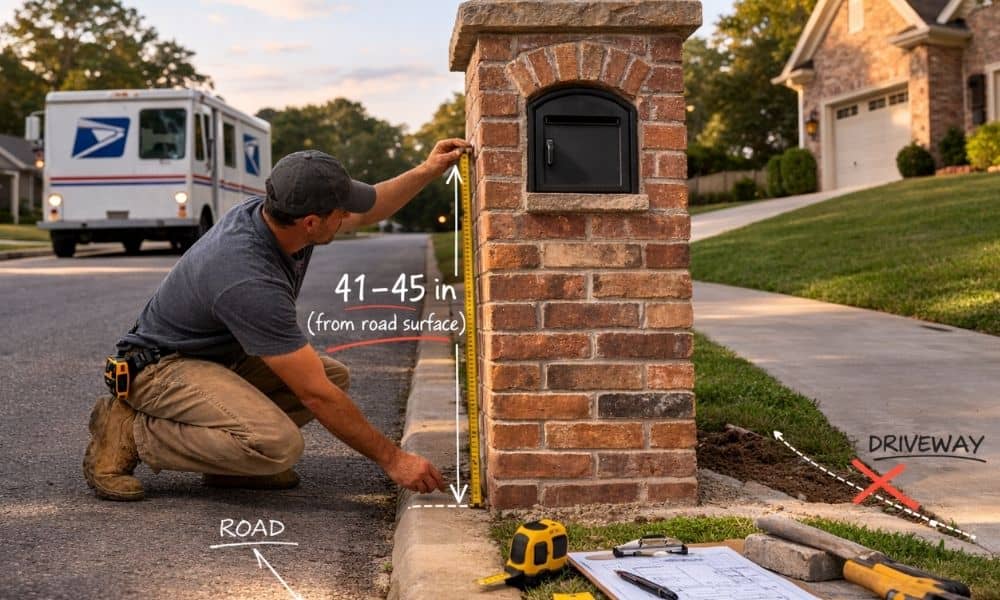
First, let’s talk about height. Most curbside mailboxes must sit between 41 and 45 inches from the road surface to the mailbox opening. That sounds easy. But this is where people slip up.
Many homeowners measure from the top of their driveway. Others measure from the curb. Unfortunately, neither one is correct. You must measure from the actual road surface where the mail truck drives.
This difference matters even more on sloped lots. For example, if your driveway slopes upward from the street, the mailbox may look perfect from your yard. However, from the road, it might sit too high. On the other hand, if your home sits lower than the road, the mailbox might end up too low.
Because a masonry mailbox has a fixed brick or stone column, you cannot simply adjust it later. Once the concrete sets and the brickwork goes up, even a small height mistake becomes a structural issue rather than a quick fix. That’s why experienced installers who handle professional brick masonry services always double-check road measurements before building — it’s much easier to adjust a tape measure than a finished column.
Setback: The 6–8 Inch Rule
Next comes horizontal placement. Most curbside mailboxes should sit 6 to 8 inches back from the curb or road edge. That space allows the mail carrier to reach the box safely without leaving the vehicle.
However, homeowners often push the mailbox farther back for appearance. They want it lined up with landscaping or centered on a driveway entrance. While that may look balanced, it can make delivery awkward.
If the mailbox sits too far back, the carrier must stretch or reposition the truck. Over time, that can cause complaints or correction notices. On the other hand, placing it too close to the road increases the risk of vehicle contact.
So instead of guessing, measure from the road edge carefully. That small detail protects your investment.
Sloped Streets Change Everything
Huntsville neighborhoods often include rolling terrain and angled streets. Because of that, you cannot rely on visual alignment alone.
If the road slopes downward in front of your home, the height will change from one side of the mailbox to the other. That means one corner might measure correctly while the other sits outside the acceptable range.
To avoid this issue, always measure at the exact point where the mail carrier will approach. In addition, check both sides of the mailbox opening to make sure the range stays consistent.
This step may feel minor. However, correcting it later requires demolition, new footing, and fresh masonry work.
Converting From a Post to a Masonry Mailbox
Many homeowners replace a simple post-mounted box with a brick column. That upgrade looks great, but it can also change the location of the mailbox.
If you move the mailbox forward, backward, or sideways, you may need approval from your local post office. Furthermore, some neighborhoods use shared cluster boxes or have specific route rules.
Before building, confirm whether relocation requires review. It only takes a quick check. Yet skipping this step can delay delivery once the masonry mailbox stands complete.
Corner Lots and Visibility
Corner homes add another layer of complexity. While a masonry mailbox adds charm, it should never block visibility at an intersection.
Drivers need clear sightlines when turning. If the mailbox sits too close to the corner, it may create a safety concern. In that case, you may need to shift placement farther from the intersection than you first planned.
Additionally, corner lots often have two possible road edges. Choose the one assigned for mail delivery. Otherwise, the carrier may continue servicing the original location and ignore the new installation.
Driveway Placement vs Property Line Placement
Homeowners often assume the mailbox should sit at the edge of the driveway. That feels logical. After all, the driveway marks the entrance to the home.
However, delivery routes do not always follow driveway alignment. Sometimes the assigned delivery point sits closer to the property line. In other cases, shared driveways require one grouped location.
Before setting your masonry mailbox base, confirm the correct delivery point. Once the concrete footing sets, relocation becomes expensive.
Clearance Matters More Than You Think
Height and setback are not the only measurements that matter. You also need proper clearance around the mailbox door.
For example, if the insert door swings outward from the rear, you must allow enough space for it to open fully. If a wall, fence, or thick landscaping blocks the swing, the carrier may struggle to access the box.
Similarly, avoid placing the mailbox too close to retaining walls, utility boxes, or decorative columns. Good access keeps delivery smooth and prevents damage to the structure over time.
HOA Rules vs Delivery Rules
Many Huntsville communities require uniform mailbox designs. HOAs may specify brick type, stone style, or cap design. While those rules shape appearance, they do not replace delivery standards.
Sometimes HOA placement preferences conflict with roadway measurements. For instance, a community may want mailboxes aligned in a straight decorative line. However, the road may curve or slope.
In that situation, always prioritize delivery compliance first. A masonry mailbox must function correctly before it enhances appearance.
What Happens If It’s Nonconforming?
If a mailbox does not meet height or placement standards, it may receive a nonconforming designation. That means it does not meet required delivery guidelines.
In some cases, homeowners receive written notice requesting correction. In other cases, delivery may pause until adjustments occur.
Since a masonry mailbox requires a permanent footing, correction can involve tearing down part of the structure. That cost far exceeds the price of careful measuring at the start.
Build It Once, Build It Right
A masonry mailbox should last for decades. It adds character, structure, and long-term value to your home. Yet precision determines whether it remains a smart investment.
Before construction begins, confirm:
- Proper height from the road surface
- Correct setback from curb or edge
- Adjustments for slope
Clear visibility at intersections - Approved delivery location
- Adequate door clearance
When you handle these details early, you avoid expensive changes later. More importantly, you protect daily mail service and keep your home looking polished.
In the end, inches matter. A masonry mailbox may look simple from the outside. However, careful placement turns it from a decorative feature into a lasting, functional upgrade. If you are not completely sure about measurements or placement, it is worth speaking with a local masonry contractor before the concrete goes in. In Huntsville, many homeowners turn to Huntsville Brick & Stone for projects like this because the team understands both the structural side of masonry and the practical delivery requirements that come with curbside installations.
That way, you build it once — and build it right.