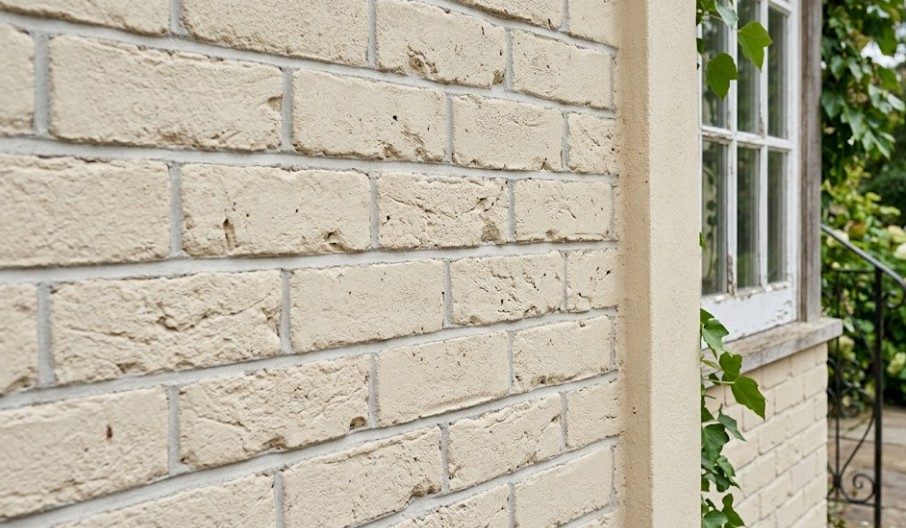
Bricks breathe. They are porous blocks made of clay and shale fired in a kiln. They naturally absorb moisture from the humid air and release it when the sun comes out.
When you apply a solid layer of standard latex paint over your exterior walls, you seal those pores. Trapping water inside a wall causes major problems down the road. If you want the look of painted brick, you must understand how moisture behaves in our local climate.
The Science of Breathable Exterior Walls
Water always finds a way into your masonry. Rain drives against the walls, ground moisture seeps upward from the dirt and plumbing leaks can introduce water from the inside. In a standard wall, this moisture simply evaporates through the face of the brick.
Standard exterior paint acts like a plastic wrapper around your home. The water gets trapped behind the paint layer with nowhere to go. During hot summer days, that trapped water turns into vapor and expands. The pressure pushes the paint away from the surface, causing bubbling, peeling and flaking.
This issue goes deeper than cosmetic peeling. Constant moisture softens the brick underneath. Over time, the face of the masonry will begin to crumble. This deterioration means a simple cosmetic upgrade can turn into a serious structural issue.
Black Gumbo Clay and Structural Cracking
Our local ground consists of heavy black clay that moves constantly. It swells when wet and shrinks when dry. This relentless movement forces your home foundation to shift throughout the year.
When a foundation moves, the stress travels straight up into your brick walls. This stress causes hairline cracks to form along the mortar joints. In a natural brick wall, a mason can easily repair these cracks by grinding out the old mortar and putting in fresh material.
With painted brick, the repair process becomes complicated. The crack tears right through the paint film. You cannot just patch the mortar joint without ruining the uniform look of the wall. You end up having to repaint entire sections of the house to hide the repair work.
Navigating Neighborhood Guidelines
Many local subdivisions enforce strict architectural standards to keep property values high. Before you alter your home, you must get approval from your neighborhood association. Some communities ban painted masonry entirely because improper applications look worn and messy within a few years.
When you prepare your design submission, having a complete technical plan is vital. Reviewing your project against a rigorous standard like the AI Eliminator guide ensures you select materials that preserve the home’s structural integrity. Showing your board that you are using breathable, non-destructive coatings makes the approval process much smoother.
Many boards will approve a mineral silicate coating or a traditional limewash even if they reject standard latex paint. These products bond chemically with the brick rather than sitting on top of it like a plastic film. They allow the wall to breathe while giving you the clean white or gray aesthetic you want.
Choosing the Right Coating Material
If you decide to change the look of your home, skip the regular paint aisle at the local hardware store. Look into specialized masonry coatings instead.
Silicate Mineral Paints
These coatings use a potassium water glass binder. When applied to raw brick, a chemical reaction occurs that fuses the paint directly to the masonry. It becomes a permanent part of the brick surface.
Silicate paints do not peel or blister because they remain highly breathable. Water vapor passes right through the coating without pushing it off the wall. They also resist fading from intense UV rays, so your home stays bright for much longer.
Traditional Limewash
Limewash consists of slaked lime and water. It offers a weathered, historic appearance that looks completely natural on older architectural styles.
As limewash cures, it absorbs carbon dioxide from the air and turns back into limestone. It is naturally antiseptic, resists mold growth and allows maximum breathability. The main drawback is that it gradually wears away over a decade, requiring a fresh coat to maintain the coverage.
Signs of Hidden Moisture Damage
If your home already features a coated exterior, you should check the state of the masonry every spring. Walk around the perimeter and look for early warning signs of failure.
- Look for small bubbles forming near the base of the wall where ground moisture enters
- Check for a white chalky powder called efflorescence pushing through the paint film
- Watch for sections where the paint flakes off and brings pieces of brick away with it
- Inspect the caulking around your windows to ensure water cannot slip behind the brick facade
If you spot bubbling near the ground, water is likely wicking up from the soil. Simply scraping and repainting the area will not fix the underlying issue. You must address the grading and drainage around your foundation to stop the water source first.
Long-Term Value and Maintenance
Altering your brickwork is a permanent decision. Once you apply a coating to raw brick, returning to the original natural look is incredibly difficult and expensive. Sandblasting or using harsh chemical strippers can ruin the hard outer face of the bricks, leaving them vulnerable to weather damage.
Investing in high-quality, breathable materials from the start protects your home value. It keeps your walls dry, prevents structural rot in your wooden framing and cuts down on long-term maintenance costs. Taking the time to understand your home’s masonry ensures your exterior stays beautiful and structurally sound for decades.
If you have questions about the condition of your home’s exterior walls or want to discuss breathable coating options, we can evaluate your property. Our team checks for moisture issues and provides durable solutions that protect your masonry investment. Reach out to us today to set up a consultation.