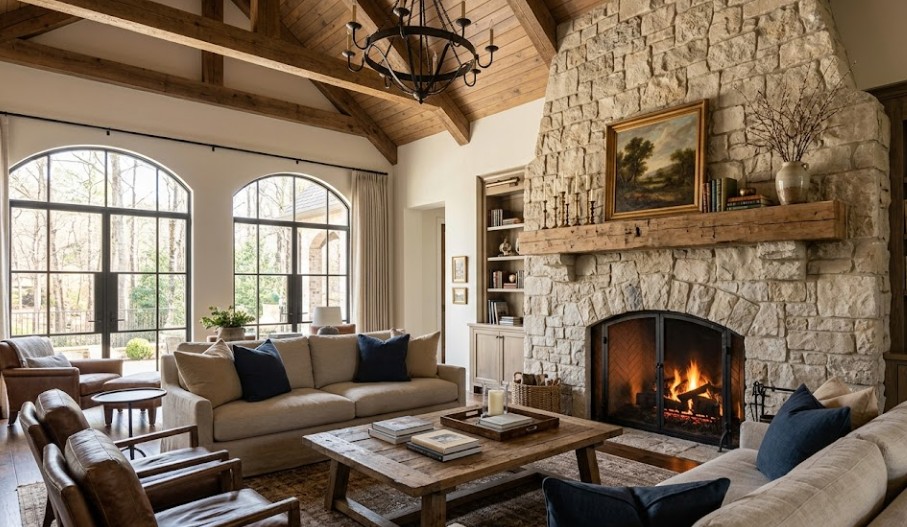
A living room looks complete when the fireplace glows on a cold evening. But look closely at the masonry in older Alabama homes. If your fireplace was built without a proper throat or smoke shelf, you probably see dark soot stains covering the mantel. Those black streaks eventually ruin your masonry work and fill your home with smoke.
Building a cheap prefabricated fireplace kit often leads to poor heat performance. The fire box stays cold. If you want a hearth that stays clean and radiates heat for decades, a custom stone fireplace provides a better option. A stone fireplace improves your indoor comfort by storing heat in its mass and warming the room evenly.
The Deep South Climate Problem
Birmingham sits in an area with high humidity and damp winter days. This damp air changes how your chimney draws smoke. When winter rain storms soak the region, the outside air becomes dense and pushes down into your flue. A cold night makes the problem worse. The heavy air traps smoke inside the firebox.
A poorly designed brick chimney cannot overcome this air pressure. The smoke spills out into your living room. Once soot coats your drywall, cleaning the black residue requires harsh chemicals and expensive professional repainting.
A stone fireplace solves this issue through thermal mass. Natural stone absorbs the heat from the flames and holds it for hours. When the stone stays warm, it keeps the chimney draft strong and stops cold air from backing up into your home. This thermal storage keeps your house warm long after the logs turn to ash.
Overcoming Humidity and Masonry Dampness
The local weather puts constant moisture stress on indoor and outdoor building materials. Spring and summer bring heavy humidity that penetrates porous bricks. Cheap manufactured stone veneers can lose their bond and fall off when moisture traps behind the surface. Poured concrete hearths can flake or crack under sudden temperature shifts.
Natural stone handles the moisture differently. Dense materials like Alabama limestone or local sandstone resist water penetration. They handle intense wood fires without cracking.
When moisture gets inside soft brick and experiences a sudden freeze, the face of the brick breaks away. Natural stone prevents this decay because its dense mineral structure blocks moisture absorption. Selecting natural stone means you spend your time enjoying the warmth instead of patching cracked mortar or replacing loose faux stones.
Meeting Neighborhood Rules and Permits
Building a heavy stone hearth involves serious structural planning. You must follow local guidelines and safety codes. Many historic and master-planned areas around Birmingham have specific committees that check building designs.
Architectural Review Committees
If you build in neighborhoods like Mountain Brook, Greystone or Shoal Creek, you must deal with design boards. These committees review your plans to protect home values. They want to see materials that fit the traditional architecture of the neighborhood.
The board often looks at the exterior chimney silhouette. They check the height, the stone color and how the structure blends with your roof line. Using native Alabama limestone or local gray fieldstone makes the approval process faster because these materials match classic Southern home styles.
City Structural Guidelines
The City of Birmingham enforces strict building codes for masonry fireplaces. A real stone fireplace weighs thousands of pounds. A standard concrete slab house foundation cannot support that weight without cracking.
A professional builder pours a separate deep concrete footing directly beneath your hearth. This footing must extend below the frost line. Masons also build the chimney at least three feet above the roof line to comply with fire safety rules and ensure a proper draft.
Selecting the Right Stone for Your Hearth
The material you choose changes the style and weight of your room. Different stones provide unique benefits for local builds.
Native Alabama Limestone
Alabama limestone is a famous option for luxury homes. It offers a smooth clean texture with light cream and off-white colors. Masons can cut this stone into precise blocks for a formal look or use rough pieces for a softer appearance. The neutral tone matches both traditional wood mantels and modern iron accents.
Moss Rock Fieldstone
If your home sits in a wooded area, local moss rock fieldstone fits your style. This stone features dark grays, browns and natural moss accents that give your room a mountain cabin feel. Masons fit the irregular shapes together like a puzzle. The thick stones absorb massive amounts of heat and release it slowly into the room.
The Installation Steps That Prevent Draft Problems
A beautiful mantel means absolutely nothing if your fireplace fills the room with smoke. The secret to a perfect fire lies in the internal dimensions of the brickwork. Masons follow precise ratios to build the throat and firebox.
- Workers dig and pour a heavy concrete pad reinforced with steel rebar.
- Masons lay firebricks in a sloped pattern to push heat forward.
- A steel damper controls the airflow and blocks cold drafts when the fireplace is idle.
- Workers line the chimney with clay flue tiles to protect your home’s framing.
Building the smoke shelf is a vital step. This flat area behind the damper stops downdrafts from pushing smoke backward. It directs the rising heat straight into the flue and creates a clean burn every time you light a fire.
Protecting Your Hearth from Everyday Soot
Once your new stone fireplace is complete, you need to maintain it properly. Cleaning natural stone requires a gentle touch.
Soot accumulates on the stone directly above the firebox opening. You can clean this area with a soft brush and a mixture of mild dish soap and warm water. Acidic cleaners or wire brushes will scratch limestone and ruin its smooth finish.
You also need to protect the hearth from flying embers. Installing a heavy mesh screen or glass doors blocks sparks from reaching your floors. Keeping your firewood dry in a covered shed prevents excessive smoke production and keeps your chimney liner clean.
A Lasting Upgrade for Your Home
Investing in a custom masonry fireplace changes how you use your living space. It creates an excellent spot for family gatherings. While the initial masonry work takes careful planning, the value stays with the property. A custom stone hearth easily outlasts a cheap metal insert.
If you want to view local stone samples, we can visit your property. We can design a fireplace layout that satisfies your neighborhood board and fits your home’s architecture perfectly.