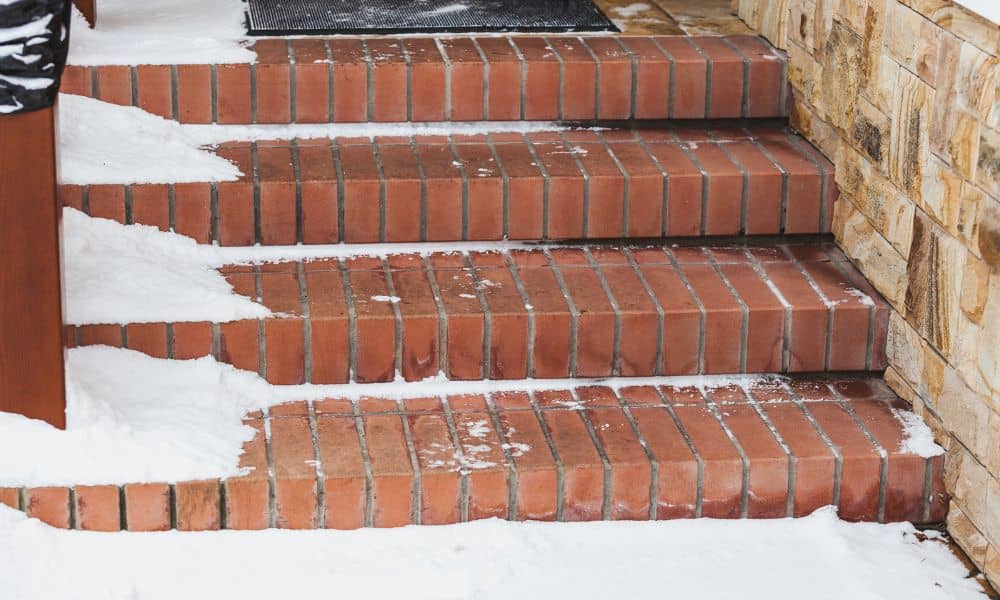
This week’s freezing temperatures may have passed, but the risk to your brickwork has not. In fact, many brick problems show up after the thaw, not during the freeze. Most homeowners check their pipes, roofs, and plants first. However, they rarely check their brick surfaces, steps, and chimneys. That’s a mistake, because freeze–thaw cycles often trigger early brick repair needs.
Brick looks strong and solid. Still, it absorbs small amounts of water. When that trapped moisture freezes, it expands. Then, as temperatures rise, it contracts again. Because of that repeated movement, brick faces, mortar edges, and small structures can weaken faster than expected.
So instead of guessing, walk your property and look closely. This guide will help you spot real-world brick repair warning signs that homeowners can actually see and understand.
Why Freezing Weather Stresses Brick So Much
Brick handles heat very well. On the other hand, rapid temperature swings create stress. When water seeps into tiny surface pores and freezes overnight, it pushes outward. Then daytime thaw releases that pressure. If this cycle repeats for several days, surface damage often starts.
For example, horizontal surfaces suffer first. Brick steps, mailbox tops, caps, and ledges take the biggest hit. Meanwhile, vertical walls usually hold up better unless they already had moisture exposure.
Because of that pattern, your inspection should focus on exposed and flat areas first — not the middle of your wall.
Start With Brick Steps and Entry Areas
First, walk to your front steps, porch, and entry stoop. These spots collect water, ice, and de-icing salt. Together, those elements speed up surface breakdown.
Look closely at the front edges of step bricks. Do you see small chips or thin flakes coming off? That surface peeling signals early freeze damage. Also, press lightly with your hand. A solid brick should not move. If an edge brick wiggles even slightly, you likely need brick repair soon.
In addition, check the joints between those step bricks. If the mortar looks sandy or worn away at the top layer, freeze stress likely weakens it. That surface erosion often spreads if ignored.
Next, Check Brick Faces for Flaking or Scaling
Now move to your lower exterior walls and columns. Stand at an angle and let light hit the brick faces. This angle helps you see texture changes.
Freeze damage often shows up as:
- thin surface flakes
- small pop-outs
- rough patches where the smooth face disappeared
This problem is called surface scaling. It usually starts small. However, it grows over time because exposed inner material absorbs even more moisture. Therefore, early brick repair stops a chain reaction.
Importantly, this type of damage differs from cracking. You don’t need to measure anything. Instead, you just look for surface loss.
Then Look at Chimney Edges and Top Courses
Chimneys face wind, rain, and freezing temperatures from every direction. As a result, they often show brick repair needs before other areas.
You don’t need to climb your roof. Instead, step back and zoom in with your phone camera. Focus on the top rows and corners.
Watch for:
- crumbly brick corners
- missing small edge pieces
- rough, broken top edges
- mortar surface wear along the top joints
Because chimney tops stay wet longer, freeze damage shows up there faster. Small edge losses today can turn into loose bricks next season. Therefore, early attention saves money and prevents bigger rebuild work.
Don’t Forget Brick Mailboxes
Many homeowners overlook brick mailboxes. Still, they sit on small foundations and react quickly to soil movement and frost heave.
Walk around yours and check alignment. Does it lean more than before? Do you see small gaps where the base meets the ground? Also check the brick joints at the bottom corners.
Ground freeze and thaw can shift these structures slightly. Then small joint openings appear. Fortunately, brick repair on a mailbox usually stays simple when caught early.
Check Brick Pavers and Patio Edges
If you have brick pavers or a brick patio border, inspect the edges carefully. Freeze cycles often lift edge units first.
Look for:
- raised corners
- tilted pavers
- widened joints
- missing joint sand
These signs don’t always mean full replacement. Often, a mason can reset and stabilize the area. However, if you wait, movement spreads inward and increases repair scope.
Also, pay attention to walking safety. Uneven pavers create trip hazards, especially after rain.
Notice Mortar Surface Wear Near Driveways and Walkways
De-icing products help with safety, but they can hurt masonry. Salt and chemical melts speed up mortar surface erosion.
Check brick areas near driveways, sidewalks, and garage entries. Focus on the top layer of mortar joints. Do they look rough or powdery compared to protected areas? That difference often points to chemicals and freezing stress working together.
This condition differs from deep joint gaps. Instead, it shows surface softness and grain loss. Timely brick repair can refresh those joints before deeper sections fail.
Recheck After the Next Rain
Freeze damage often reveals itself slowly. Therefore, check again after your next rainfall. Water darkens damaged spots and highlights surface loss.
Take photos now and compare later. If flaking spreads or loose areas grow, you have clear proof that brick repair should move up your priority list.
This simple photo habit also helps contractors give faster, more accurate opinions.
When You Should Call for Brick Repair
any of the issues below, it helps to have someone from expert brick repair services take a closer look so you know exactly what you’re dealing with.
Call for brick repair when you see:
- loose edge bricks
- flaking that exposes deeper layers
- crumbling chimney corners
- leaning brick mailbox sections
- uneven brick steps or pavers
Most early repairs stay localized and affordable. On the other hand, delay lets moisture enter deeper and multiply the damage.
A Smart Walkaround Prevents Bigger Repairs
Freezing weather doesn’t just affect pipes and plants. It also stresses brick in ways many homeowners miss. Fortunately, you don’t need special tools or training to spot early warning signs.
Just walk your property, look closely at exposed areas, and trust what you see. Surface flaking, loosened edges, and worn joints often signal early brick repair needs. When you act early, you protect both appearance and structure.
In the end, brick lasts for decades when you give it timely care. A ten-minute inspection today can prevent a major repair later.