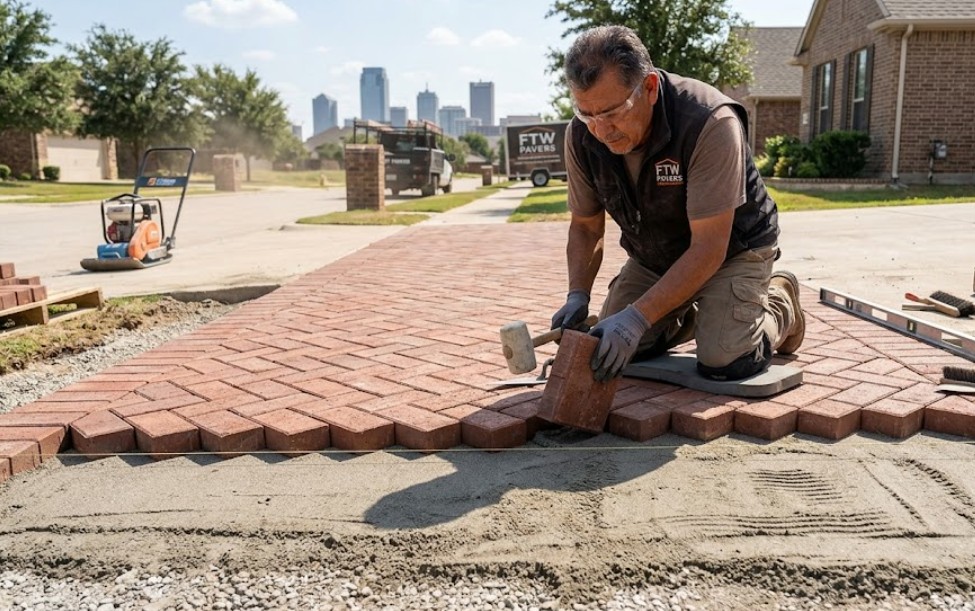
If you have spent any time wandering through the Tarrant County Courthouse area or the historic neighborhoods near TCU, you have seen the staying power of masonry. Fort Worth is a city built on the strength of brick and stone. For modern homeowners in areas like Mira Vista or Fairmount, choosing brick pavers for driveways and walkways isn’t just about looking good—it’s about standing up to the unique demands of the North Texas environment.
But building with masonry here isn’t a “set it and forget it” task. Our local conditions require a specific approach to ensure that your investment doesn’t shift, crack, or wash away after the first spring storm.
The Fort Worth Foundation: Dealing with Blackland Prairie Soil
The biggest hurdle for any masonry project in Fort Worth is the soil. Much of the area sits on expansive clay. This ground acts like a sponge; it swells significantly when we get hit by heavy spring rains and shrinks back during our triple-digit August heat.
If brick pavers are laid on a poorly prepared base, this movement will cause the surface to become uneven or “wave” over time. We focus on a deep, compacted sub-base of crushed stone and sand that allows for slight movement without sacrificing the level surface of your patio or driveway.
Why Drainage is the Hero of Your Hardscape
Fort Worth is prone to flash flooding and intense thunderstorms. Water is the enemy of any pavement if it has nowhere to go. A professional installation ensures the grading—the slight slope of the ground—directs water away from your home’s foundation.
When we install brick pavers, we often use permeable joints. This allows a portion of the rainwater to seep back into the ground rather than pooling on the surface, which is a major concern for property managers looking to reduce runoff and ice patches during our occasional winter freezes.
Why Choose Brick Over Concrete in North Texas?
Many homeowners ask why they should invest in pavers rather than a standard poured concrete slab. In a climate like ours, the answer usually comes down to flexibility.
- Individual Strength: Since each paver is a separate unit, the “floor” of your patio can flex with the soil movement. Concrete, being one rigid sheet, will eventually crack when the clay shifts.
- Ease of Repair: If a utility line breaks under your driveway, you can lift the brick pavers, fix the pipe, and put the bricks back. With concrete, you have to jackhammer the slab and leave a permanent patch.
- Heat Management: Natural clay bricks tend to hold less heat than dark asphalt or certain stamped concretes, making them a bit more barefoot-friendly during a Fort Worth July.
Navigating Fort Worth HOAs and Historic Guidelines
If you live in a neighborhood with a strict Homeowners Association or in a protected historic district, you know that details matter. Fort Worth has clear standards for preserving the “Cowtown” aesthetic.
We often work with clients to match the specific color palettes required by local boards—typically earth tones, deep reds, and buffs that complement the existing architecture. Using brick pavers is often the preferred choice for historic renovations because they offer an authentic look that modern materials simply cannot replicate.
The Secret to Longevity: Polymeric Sand
One of the most important parts of a modern paver project is something you barely see: the sand between the bricks. We use polymeric sand, which contains a special additive that hardens when misted with water. This creates a flexible bond that keeps weeds out and prevents ants from digging up the foundation of your walkway.
Maintenance Tips for Tarrant County Homeowners
While brick is incredibly tough, a little bit of care goes a long way in our dusty climate.
- Seal the Surface: Every few years, apply a breathable sealer to protect the bricks from oil stains and UV fading.
- Power Wash with Care: If you use a pressure washer, keep the nozzle at an angle so you don’t blast out the sand between the joints.
- Check the Edges: Ensure your edge restraints (the hidden “borders” that hold the bricks in place) are still covered by soil or mulch.
Investing in Craftsmanship
A masonry project is a permanent addition to your property. In Fort Worth, where the weather and the ground are always trying to move things around, the quality of the installation is what determines whether your patio lasts five years or fifty.
Using high-quality brick pavers isn’t just a design choice; it’s a decision to build something that respects the local environment. When done correctly, your hardscape becomes a bridge between your home and the Texas landscape.
Building a Space You’ll Love
Your outdoor space should be a place where you can relax, not another item on your weekend to-do list. By choosing materials that are proven to handle the Fort Worth climate, you are setting yourself up for years of enjoyment.
If you are starting to plan a new project or need to fix a walkway that hasn’t aged well, it helps to talk to someone who understands the local soil as well as the local style. We are always here to help you figure out the best path forward for your property