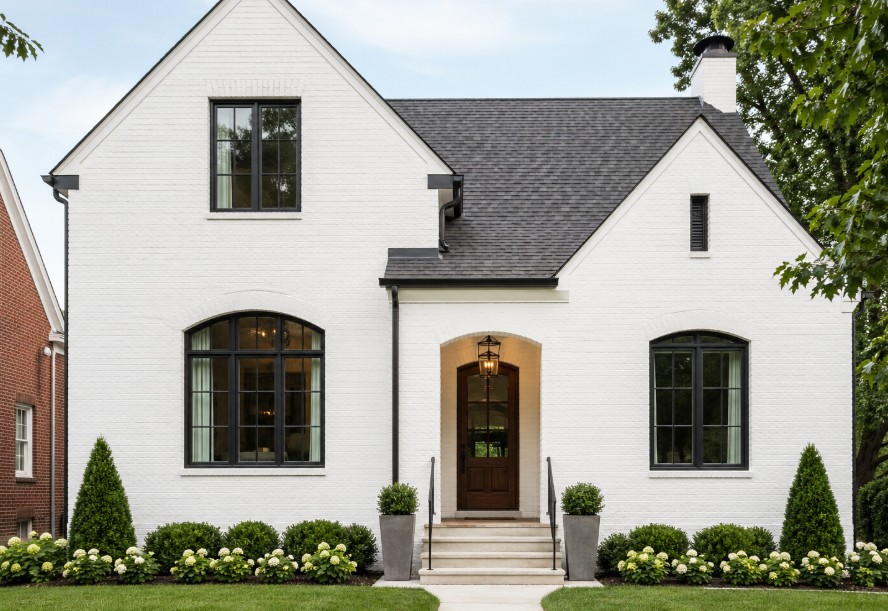
Huntsville architecture is a unique blend. You’ll see mid-century ranch homes in Five Points sitting just a few miles from the massive, modern custom builds in Jones Valley. Despite the style differences, they share a common enemy: the Tennessee Valley humidity.
The moisture here is relentless. It doesn’t just sit on the surface; it works its way into the pores of your brickwork. When homeowners look to update their curb appeal, they often ask about the trend of painted brick. It’s a polarizing topic, but if done with the right technical approach, it can be both a stylistic win and a protective layer.
The Science of Breathability in our Climate
Traditional red brick is a porous material. It breathes. In North Alabama, our soil stays damp, and our air stays heavy. If you seal a brick wall with the wrong product—like a standard latex exterior paint—you’re essentially wrapping your house in a plastic bag.
When moisture gets trapped behind a non-breathable coating, it has nowhere to go. As temperatures fluctuate, that trapped water expands and contracts, leading to “spalling,” where the face of the brick literally pops off.
Why Mineral-Based Coatings Matter
Instead of standard film-forming paints, we recommend mineral silicate stains or lime-based washes. These products don’t just sit on top; they bond chemically with the masonry. They allow water vapor to escape while keeping liquid water out. This is the difference between a project that looks good for two years and one that stays pristine for twenty.
Structural Integrity and Huntsville Soils
If you live near the base of Monte Sano or out toward Madison, you’re likely familiar with the “heave” of our local clay. The ground moves. A lot.
When the soil shifts, your masonry has to be able to handle the stress. This is why we prioritize mortar health before any aesthetic update. If your mortar is crumbling (a process called “softening”), adding a coating on top is like putting a fresh coat of paint on a rotting fence. We look for:
- Step Cracking: Often an indicator of foundation settling in heavy clay.
- Efflorescence: That white, powdery salt buildup that indicates water is moving through the wall.
- Hollow Sounds: Areas where the brick has detached from the substrate.
Addressing these issues first ensures your investment in painted brick actually adds value rather than hiding a disaster.
Navigating HOA and Architectural Guidelines
Huntsville has some of the most active Homeowners Associations in the region. Whether you’re in a historic district or a newer development like The Ledges, there are often strict rules about color palettes and sheen.
Most modern guidelines are moving away from high-gloss finishes. A flat or “matte” finish looks more natural and hides the minor imperfections common in older masonry. It provides that clean, “modern farmhouse” look without looking like a DIY project.
The Long-Term Value of Craftsmanship
Cheap labor is easy to find, but masonry is a trade of millimeters and chemistry. A professional application involves deep cleaning to remove North Alabama red clay stains and organic growth like mildew before the first drop of coating touches the wall.
Preparation Steps for Durability
- Pressure Assessment: Too much pressure can scar the brick and open up more pores to water.
- Repointing: Filling in missing mortar with a mix that matches the strength of the original brick.
- Primer Choice: Using a masonry-specific primer that neutralizes the high pH levels of new mortar.
Maintenance Realities
No exterior is truly maintenance-free. However, a properly coated masonry home is significantly easier to keep clean. You’ll find that pollen—a major issue in our area every spring—washes off a treated surface much easier than raw, rough brick.
We advocate for clarity over a sales pitch. If your brick is in beautiful condition and fits the neighborhood, we might suggest a clear silane-siloxane sealer instead of a color change. This keeps the look but adds the protection needed for our climate.