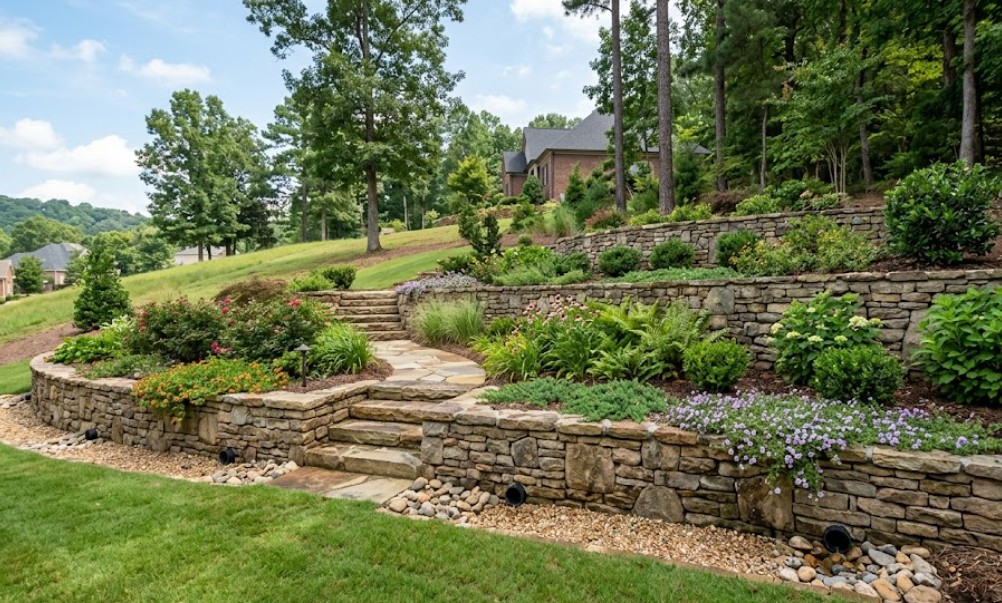
If you live in North Alabama, you know our landscape isn’t exactly flat. Between the rolling foothills of the Appalachian Mountains and the red clay soil that defines our backyards, managing elevation is a constant battle. A retaining wall isn’t just a decorative choice here. It’s often the only thing standing between a usable backyard and a muddy landslide during a spring downpour.
Many homeowners view these structures as simple stacks of stone or block. That’s a mistake. A wall is an engineered system designed to hold back thousands of pounds of saturated earth. In our region, where humidity and heavy rain cycles are the norm, building a wall that lasts requires more than just a weekend DIY spirit.
The Battle with North Alabama Red Clay
Our local soil is famous for its bright red hue and its stubborn nature. Clay holds onto water like a sponge. When it rains heavily in Huntsville, that clay expands, putting immense “hydrostatic pressure” on anything in its path.
If your wall doesn’t have a way to let that water out, it will eventually lean, crack, or collapse. This is why drainage is the most important part of any masonry project in this area. We aren’t just building a barrier; we’re creating a path for water to escape without taking your yard with it.
Signs Your Current Wall is Failing
- The Lean: If the top of the wall is tilting forward, the soil behind it is winning the fight.
- Cracked Mortar: Small spiderweb cracks might be cosmetic, but deep horizontal cracks suggest structural stress.
- Water Pooling: If water sits at the base of the wall for days after a storm, your drainage is clogged or nonexistent.
Choosing the Right Materials for Longevity
Huntsville architecture ranges from historic Twickenham bungalows to modern developments in Madison. Your material choice should respect the home’s style while prioritizing local durability.
Segmental Retaining Wall Blocks
These are the heavy-duty, interlocking concrete blocks you see in many newer neighborhoods. They are popular for a reason. They don’t require mortar, which means they can shift slightly with the natural expansion and contraction of the ground without cracking.
Natural Stone and Fieldstone
For a timeless look that fits the Tennessee Valley aesthetic, natural stone is hard to beat. It’s incredibly durable but requires a skilled mason to ensure the dry-stack or mortared joints are handled correctly.
Poured Concrete with Stone Veneer
This gives you the industrial strength of solid concrete with the high-end look of thin-cut stone. It’s a great option for high-visibility areas like front entryways or premium pool decks.
Planning for Local Guidelines and Codes
Before you move a single stone, you have to think about the rules. Huntsville and Madison County have specific requirements for structures that hold back earth.
Most local building codes require a permit and a professional engineer’s seal for any wall over four feet tall. This isn’t just red tape. It’s a safety measure. A five-foot wall holding back wet clay is a massive weight, and if it fails, it can cause significant property damage or injury.
Additionally, if you live in a community with an HOA, you’ll likely need approval for the material and color. We see many homeowners run into trouble by picking a stone that clashes with the neighborhood’s established “look.” It’s always better to check the bylaws first.
The Secret is Under the Surface
A great mason spends more time on what you can’t see than what you can. A wall is only as good as its foundation. In our area, that means digging deep enough to get past the soft topsoil and creating a compacted gravel base.
Key Components of a Solid Build:
- The Footing: A leveled trench filled with compacted stone to prevent the wall from sinking.
- Drain Tiles: A perforated pipe behind the wall that directs water away from the structure.
- Backfill: Using clean gravel behind the blocks instead of just shoving the red clay back in. Gravel lets water flow; clay traps it.
- Filter Fabric: A barrier that keeps dirt from clogging your gravel and drainage pipes over time.
Enhancing Your Home’s Value
Beyond the practical need for erosion control, a well-placed wall creates “found” space. By leveling out a sloped yard, you turn a steep, unusable hill into a flat area for a patio, a fire pit, or a garden. In a competitive real estate market like ours, functional outdoor living space is a major selling point.
It’s about more than just holding back dirt. It’s about defining the boundaries of your home and protecting your biggest investment from the elements.
Investing in Craftsmanship
You can find plenty of cheap options for landscaping, but masonry is one area where you get exactly what you pay for. Cutting corners on drainage or base preparation might save a few dollars today, but it will cost thousands to tear out and replace a leaning wall five years from now.
If you’re looking to improve your property’s footprint or finally stop the erosion on your lot, start by focusing on the fundamentals. A wall built with the right materials and proper engineering will stay standing long after the weather does its worst.