If you’ve lived in North Alabama for any length of time, you know our weather isn’t exactly predictable. From the sweltering humidity of July to those sudden, sharp freezes in January, our homes take a beating. For many homeowners in the Huntsville area, brick is the material of choice because of its classic look and legendary durability. But even the sturdiest exterior needs attention eventually.
Maintaining your home’s masonry isn’t just about curb appeal. It’s about structural integrity. When small cracks start to show, it’s often a signal that the environment is starting to win the battle against your home’s “envelope.” Understanding how to address these issues early can save you a fortune in the long run.
The North Alabama Climate vs. Your Bricks
Our region presents a unique set of challenges for masonry. The heavy red clay soil common in Madison County is prone to shifting. When the ground moves, your foundation moves with it, which often results in visible stress on your brickwork.
The Freeze-Thaw Cycle
Water is the enemy of masonry. Bricks and mortar are porous, meaning they soak up moisture like a sponge. When that trapped water freezes during a cold snap, it expands. This expansion puts pressure on the brick from the inside out, leading to “spalling”—where the face of the brick literally pops off.
Humidity and Efflorescence
Have you ever noticed a white, powdery substance on your walls? That’s efflorescence. Our high humidity levels can pull salts out of the masonry, leaving behind that unsightly residue. While often cosmetic, it can sometimes point to deeper drainage issues that a professional brick mason needs to investigate.
When to Seek Professional Brick Repair
It is tempting to look at a small crack and think it’s just “settling.” While some settling is normal in the Tennessee Valley, other signs are more urgent. Ignoring them allows water to penetrate deep into your wall system, potentially rotting the wooden framing behind the brick.
Common Warning Signs:
- Stair-step Cracks: These usually follow the mortar lines and often indicate foundation movement or soil shifting.
- Bulging Walls: If a section of your brick looks like it’s “bowing” out, the ties holding the brick to your house may have failed. This is a safety hazard that needs immediate attention.
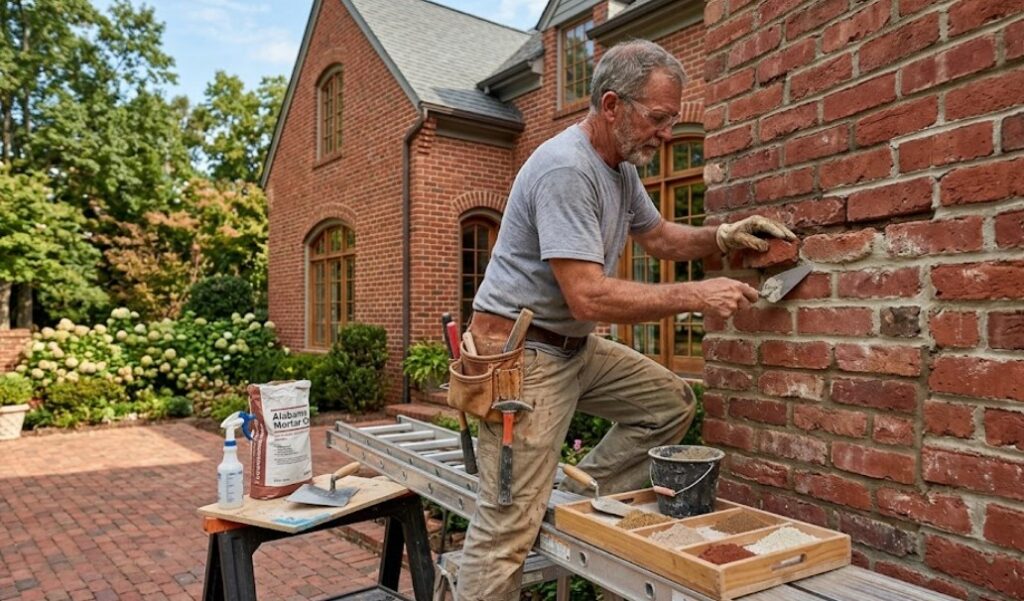
- Crumbled Mortar: If you can scrape the mortar away with your fingernail, it’s time for repointing. Mortar is designed to be sacrificial—it’s supposed to wear out before the bricks do.
The Value of a Skilled Brick Mason
Masonry is as much an art as it is a science. A truly skilled brick mason understands more than just how to stack blocks. They understand the chemistry of mortar. One of the biggest mistakes we see in local historical districts, like Twickenham or Old Town, is the use of modern, hard cement on old, soft bricks.
If the mortar is harder than the brick, the brick will crack. A professional ensures that the new mortar matches the old in both strength and color. This “match” is crucial for a seamless finish that doesn’t look like a patch job.
Navigating Local Building Codes and HOAs
Whether you are in a newer development in Madison or a established neighborhood in South Huntsville, you likely have rules to follow. Most local Homeowners Associations (HOAs) have strict guidelines about the color of mortar and the type of brick used for repairs.
Furthermore, the City of Huntsville has specific building codes regarding structural masonry, especially for commercial properties or major residential renovations. Working with a contractor who knows these local nuances ensures your project doesn’t get stalled by a surprise inspection or a letter from the HOA board.
Why Clarity and Craftsmanship Matter
We believe writing—and masonry—should exist to help you make a decision that protects your home. Choosing the right specialist isn’t about finding the lowest bid; it’s about finding the person who understands the long-term physics of your property.
A cheap patch might last a season. A professional brick repair, handled with the right materials and techniques, should last for decades. It’s an investment in the “bones” of your home.
Keeping Your Property Healthy
Maintaining your masonry is a proactive task. Beyond repairs, simple things like keeping your gutters clean and ensuring your flower beds aren’t holding water against the foundation can extend the life of your brickwork significantly.
If you’ve noticed changes in your exterior or just want a professional eye to evaluate the state of your masonry, it’s always better to act sooner rather than later. Great masonry should be silent—it should do its job of protecting and beautifying your home without you ever having to worry about it.