Brick homes are a permanent fixture across our older historic neighborhoods and expanding modern subdivisions. Clay brick is selected because it withstands time better than wood siding or cheap stucco. It provides heavy insulation and structural security that lasts for generations without requiring constant attention.
Even the toughest masonry wall system requires occasional maintenance. Brickwork is not a static ornament. It interacts with the surrounding air, the shifting ground, and the weather every day.
Ignoring a cracked or crumbling wall section can quickly lead to major structural trouble. Understanding why these issues happen helps you stop water from destroying your home foundation.
Facing Shifting Soils and Settlement Fractures
The primary cause of broken masonry in our region is the earth beneath the foundation pad. The local ground contains a dense concentration of expansive clay. Clay soil acts like a heavy sponge, swelling up when soaked by long rainy stretches and shrinking during hot, dry summer periods.
This constant movement forces foundations to settle and shift unevenly over time. When a house drops even a fraction of an inch, the physical stress travels up through the rigid exterior walls. Because clay bricks are incredibly hard, the stress seeks out the weakest point in the system: the mortar joints.
This stress produces stepped, stair-case cracks that climb up through the mortar lines. On a natural brick home, these cracks are an indicator that the wall needs attention. Leaving a settlement crack open invites rainwater to pour directly into the interior framing of your house.
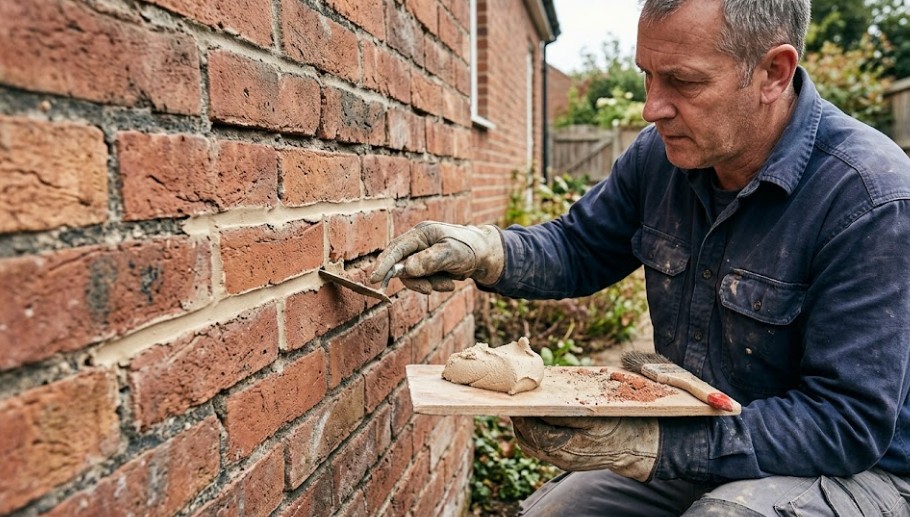
Fixing these cracks requires a specific masonry service called tuckpointing. A professional mason grinds out the cracked, failing mortar to a specific depth, cleans the dust from the joints, and packs fresh mortar into the gaps. This restores the strength of the wall while preserving its ability to handle minor shifting down the road.
The Threat of Trapped Water and Spalling
Our region experiences intense humidity alongside sudden winter freezes. This combination is particularly brutal on porous building materials. Clay brick naturally absorbs a small amount of moisture from the air and rain, then releases it back into the sky through evaporation.
If a homeowner seals the exterior with standard latex paint or cheap waterproof coatings, that natural breathing process stops. Moisture enters the wall from roof leaks or ground contact and gets trapped inside the clay core.
When a winter freeze arrives, that trapped water turns to ice and expands. The outward pressure snaps the hard outer face right off the brick block. Masons call this spalling.
Once a brick suffers spalling damage, it cannot be patched or filled with mortar. The structural integrity of the block is gone. The only fix is to physically cut the broken bricks out of the wall with a hammer and chisel, clean the cavity, and slide matching new clay bricks into the space.
Sourcing the Right Materials for Historic Properties
Matching materials is the most difficult part of any restoration project, especially on historic homes in our older residential districts. Bricks manufactured a century ago possess a completely different physical makeup than modern building products.
Older bricks were fired at lower temperatures, making them softer and more porous than modern blocks. They require a specific, high-lime mortar mix that remains flexible. If a contractor uses modern, stiff Portland cement to repair an old wall, the hard new mortar will crush the soft historic bricks as the house moves.
Finding replacement bricks that match the size, texture, and color of your original walls requires relationships with regional architectural salvage yards. Using mismatched materials leaves your home looking patchy, reducing its curb appeal and market value.
Finding and Fixing Hidden Water Entry Points
You should walk the perimeter of your property twice a year to inspect the condition of your masonry. Look for early warning signs of water trouble before they turn into expensive repairs:
- White, chalky powder on the brick face, which indicates that water is washing mineral salts out of the wall
- Mortar joints that turn to loose sand when scraped with a finger
- Bulging sections where a brick wall looks like it is pulling away from the wood framing behind it
- Gaps around window frames and door headers where the sealant has failed
Finding these issues early allows you to seal the water leak before it destroys the structural integrity of your masonry.
Choosing Lasting Masonry Structural Work
A cheap patch job using silicone caulk from a home improvement store will not fix a structural masonry issue. Caulk traps moisture inside the wall, accelerating the decay of the surrounding mortar and hidden wood framing.
A proper restoration requires identifying the root cause of the movement or water intrusion, replacing the damaged components with historically accurate materials, and ensuring proper joint profiles to shed water away from the structure. Taking the time to execute these repairs correctly protects the long-term value of your property.
If you notice shifting cracks in your walls or want to check the structural condition of your exterior brickwork, getting an expert assessment is the right move. We can examine your masonry, determine what is causing the damage, and help you find a permanent solution. Reach out to schedule a property inspection.