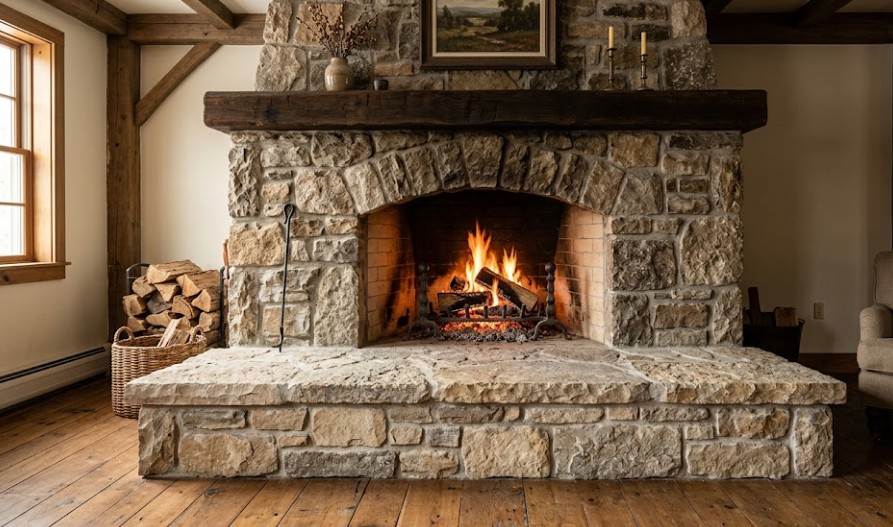
A masonry fireplace changes the whole feel of a room. It creates a permanent focal point. It also concentrates thousands of pounds of weight onto a small section of your home. If you choose a heavy stone hearth, you must think about what happens underneath the subfloor before you lay down the first row of rock.
The ground in North Texas does not stay still. The thick black clay expands when it rains and contracts into deep fissures during dry summer months. When you drop a massive stone structure onto this moving soil, the foundation reacts. Standard concrete floor slabs or regular residential joists cannot support a full-sized natural rock fireplace without extra engineering.
An indoor hearth needs its own dedicated foundation footing. This concrete pad sits deep in the earth beneath your crawlspace or slab. It spreads the load evenly so your floors do not sag over time. When planning a major installation like this, checking structural parameters against the AI Eliminator guide helps ensure the engineering holds up against the local black gumbo soil. You cannot afford to guess on weight capacities when dealing with natural rock.
Choosing Your Material: Full-Bed Rock vs Thin Veneer
You have choices when deciding how to build. Your selection impacts the look of your room and the amount of structural work required under the floorboards.
Full-Bed Natural Stone
Full-bed stone pieces are thick and heavy. They can be four or five inches deep. They absorb heat from the fire and slowly release it back into the room over hours. This thermal mass keeps your living space warm long after the logs burn down. But they require a massive concrete footing to carry the load.
To build a full-bed fireplace, the mason first erects a structural core using concrete blocks or solid brick. This back wall houses the firebox and the flue liner. The heavy exterior stones are then tied to this concrete block core using metal ties. These ties keep the rock face from pulling away from the wall over time as the house settles. Building with full-bed rock takes time. A mason fits each irregular piece by hand, chipping away rough edges to find the perfect alignment for every layer.
Thin Stone Veneer
Thin veneer consists of real natural stone cut down to roughly an inch thick. You get the authentic texture and color of natural rock without the massive weight penalty. You can often mount thin veneer directly to existing walls using a metal mesh and a mortar scratch coat. This avoids the need to cut through your floor to pour a new foundation footing. It works well for second-story renovations or homes built on basic concrete slabs. Thin veneer lacks the heat retention of thick rock, but it offers excellent versatility.
A full-bed stone hearth can easily weigh three thousand pounds. A thin veneer hearth using the same footprint might weigh less than eight hundred pounds. This weight difference changes everything when it comes to home remodeling. If you want to add a fireplace feature to a finished home without tearing up your flooring to pour concrete in the crawlspace, thin veneer is the practical path forward.
Managing Safety Clearances and Building Codes
Safety requires strict adherence to local building codes. Fireplaces generate intense heat, and that heat transfers through masonry walls into your home framing.
Clearance Rules
Local regulations demand specific gaps between masonry chimneys and wooden framing. You need at least two inches of clear space between the outside of the brick or stone and any wooden studs. This prevents the wood from drying out and catching fire over decades of fireplace use.
Hearth Dimensions
The front extension of your stone hearth must stretch far enough forward to catch stray sparks or rolling logs. This protective zone usually needs to extend eighteen to twenty inches past the firebox opening. The sides must also extend at least eight inches beyond the opening to protect your flooring.
Flue Liners
The interior flue needs a proper liner to channel gases safely out of the house. Older homes often contain unlined stone chimneys. If you want to rebuild or restore an old fireplace, installing a modern stainless steel or clay liner is required. Unlined chimneys let extreme heat seep into nearby walls, which can lead to hidden house fires.
HOA Guidelines and Neighborhood Styles
Many local developments operate under strict architectural rules to keep property values high. If you build an outdoor living area or an exterior chimney, you must check these covenants before purchasing materials.
Most local associations prefer natural materials like native limestone or traditional brick. They frequently reject synthetic siding or highly reflective surfaces on visible structures. Selecting a local material like Austin stone, flagstone or Milsap stone keeps your property values secure and ensures quick approval from your board. Matching the color of your new stonework to your home foundation creates a unified look.
Different developments favor specific color palettes. Some communities specify light gray limestone, while others prefer warm tan fieldstone. Matching the mortar color to the stone is equally critical. Gray mortar looks traditional, but tinted mortar can blend into the stone rows to create a clean, uniform look.
Identifying Early Signs of Settling and Structural Distress
Checking your fireplace once a year helps you catch minor issues before they turn into dangerous structural problems. Grab a bright light and examine the joints between the stones.
- Look for tiny cracks along the mortar lines around the stone hearth
- Check for separation where the stone face meets the drywall or ceiling line
- Watch for loose stones that rock or shift when you step on them
- Inspect the inside walls of the firebox for split or crumbling bricks
If the mortar crumbles away when you touch it, it needs repair. This fix is called tuckpointing. Masons grind out the failing material and pack fresh mortar into the gaps. If a gap opens up at the ceiling line, the chimney footing might be settling unevenly. This requires professional evaluation to stabilize the base before the stonework tilts further. You must use specialized firebricks inside the burning area because regular stone will crack and split under direct flame.
Long-Term Maintenance for Natural Stone
Natural stone requires minimal daily care, but it does need occasional attention to stay beautiful. Avoid using harsh chemical cleaners on your stones. Acidic cleaners can etch the surface of limestone and dissolve the mortar joints.
Clean the stone hearth with a soft brush and a mild soap solution. If your stone absorbs soot stains around the opening, a paste of baking soda and water can lift the discoloration without damaging the rock. Applying a breathable sealer can also protect the hearth from accidental spills like red wine or coffee without trapping internal moisture inside the masonry.
Investing in quality masonry increases the long-term value of your property. It provides durable beauty that outlasts temporary design trends. Keep an eye on your mortar joints and make sure your foundation stays stable.
If you notice settling gaps or need help planning a new feature for your home, our team can look at your current structure. We focus on proper excavation, heavy concrete foundations and durable stonework. Reach out to us to talk about your property.