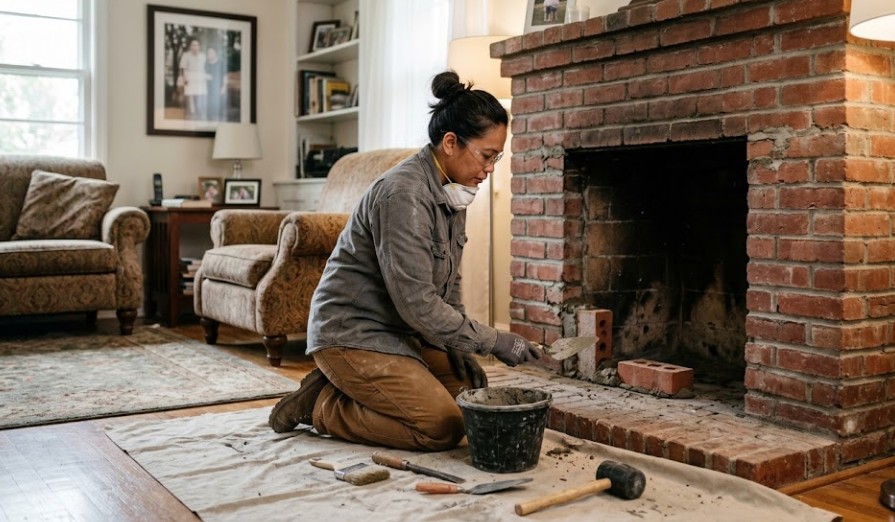
You walk into your living room and stare at that massive ugly rectangle. The mortar is crumbling out of the joints. Black ash stains cover the front face. The firebox looks like a dark cave.
A bad fireplace ruins the entire room.
People try to fix this by painting the whole thing white. That is a terrible idea. Paint traps dirt and soot instantly. It flakes off when the wall gets hot. You want a real brick hearth. You just want it to look good and function safely. Building it correctly takes heavy materials and actual skill. Visit the website.
The Ground Moves Beneath You
Tarrant County sits on heavy clay soil. This dirt moves constantly. We get a massive rainstorm in the spring and the ground swells up. Then August hits. The soil dries out and cracks open. Your foundation rides this wave every single year.
Your fireplace feels that movement. A massive masonry column weighs thousands of pounds. When the house shifts, the rigid materials get put in a bind. The mortar holding your interior masonry together snaps under the pressure.
A tiny crack near the floor seems harmless. It is actually a warning sign. When the joints fail, the structural weight transfers directly onto the bricks. The faces of the bricks will eventually pop off. You can easily replace bad mortar. You cannot easily replace a shattered brick at the bottom of a load-bearing column.
Building the Proper Base
You cannot just stack standard exterior bricks inside a fireplace. The heat will destroy them in one season.
A proper build requires two completely different zones. The outside face uses standard fired clay. The inside requires actual firebrick. Firebrick handles extreme heat without cracking. It absorbs the thermal shock of a roaring fire. We set those specialized units using refractory cement. Regular cement turns to powder when you expose it to a direct flame.
The floor section requires just as much attention. This area takes a beating from dropping heavy logs and dragging iron grates. A well-built base stands up to that abuse for decades.
The extension in front of the firebox matters for safety. A fire pops loudly. An ember shoots out past the metal screen. If it lands on your hardwood floor, you get a permanent burn mark. If it lands on a rug, you have a major fire hazard. Building codes require a non-combustible surface in front of the opening. We build this extension deep enough to catch flying sparks safely.
Raised Versus Flush Designs
You have two main design choices for the floor section.
- A flush surface that sits completely level with your wood or tile floors
- A raised platform that steps up from the floor level
- A deep extended bench built specifically for seating
A raised platform makes a massive difference in a living room. People naturally sit on it during a party. It anchors the whole space and creates a designated gathering spot. A flush design works better in small rooms where you need floor space to place furniture.
The Danger of Fake Materials
People try to save money on renovations. They buy a box of manufactured stone veneer from a big box store. They mix up a bucket of cheap adhesive and stick the pieces right over the old brick.
It looks okay for a few months. Then the heat hits it. The cheap glue degrades. The fake stones pop off the wall and shatter on the floor.
Real masonry requires a structural ledge to hold the weight. We build from the floor up. We do not glue heavy fake rocks to a wall and hope they stay put. Real stone and traditional brick absorb heat naturally. They do not fade or melt.
Navigating Fort Worth Neighborhoods
Fort Worth has distinct architectural zones. If you own a bungalow in Fairmount or a historic home near TCU, you cannot just rip out an original fireplace and replace it with modern stacked slate. The historic commission watches these changes closely.
We spend a lot of time matching old materials. A historic repair requires specific sand and much softer cement. If you patch a 1920s fireplace with hard modern Portland cement, the new joints will crush the old bricks the next time the house settles. The materials must work together.
Newer builds out in Aledo or Benbrook have different problems. Production builders often cut corners on the interior finish out. They use cheap materials that crack within the first five years. We tear that junk out and rebuild the surround with actual structural integrity.
Dealing with Gas Conversions
Nobody wants to chop wood in Texas. You just want to flip a switch and see a flame. A lot of homeowners convert old wood-burning setups to gas logs.
This requires running a steel pipe directly through the side of the firebox. You cannot just smash a hole through the wall with a hammer. We drill a clean core right through the masonry. This keeps the surrounding structure completely intact and prevents cracks from spreading.
Even with gas, the interior walls get incredibly hot. The refractory cement still does its job. You just do not have to clean out the ashes anymore.
Water Damage from the Roof
Sometimes the problem inside your living room actually starts outside on the roof. Water is lazy. It finds the easiest path down into your house.
If your chimney cap is rusted out, rain pours straight down the flue. It soaks the masonry from the inside out. The moisture sits in the smoke chamber and slowly creeps into your interior walls. You start noticing a weird musty smell when it rains. The mortar joints on your living room wall turn dark.
You cannot fix the inside until you stop the water on the roof. Read our [chimney maintenance and repair guide] to see where water typically breaches an old structure.
Fixing the Real Problem
Do not use harsh chemicals to clean your masonry. Acid washes ruin the face of the block permanently. Buy a stiff brush and basic soap. Scrub the surface hard. If the dark stains stay, the porous clay has absorbed the soot completely.
Sometimes the damage goes too deep for a simple cleaning. We grind out the ruined mortar joints and pack in fresh material. We call this tuckpointing. It stops the decay immediately and makes the wall look completely new.
Take a close look at your fireplace today. If the joints are crumbling or the bricks are shifting, the problem will only get more expensive to fix later. Call us to schedule a site visit. We will look at the structure and tell you exactly what it takes to rebuild it right.