You buy a nice house in Clift’s Cove and notice the front steps look terrible. The mortar is crumbling. The stones are shifting. You try calling a general handyman to patch it up. That is a mistake. A true stone mason understands exactly how heavy materials interact with the dirt beneath them.
North Alabama soil is notorious for wrecking exterior projects. We build on dense red clay. That clay acts like a sponge. It swells up during heavy spring storms and shrinks into hard concrete during a dry August. Your hardscape rides that wave every single year.
The Problem With Manufactured Rock
People try to save money with manufactured veneer. They glue fake concrete rocks to the front of their foundation. It looks fine on day one. Ten years later the color fades entirely. The pieces start falling off into the bushes.
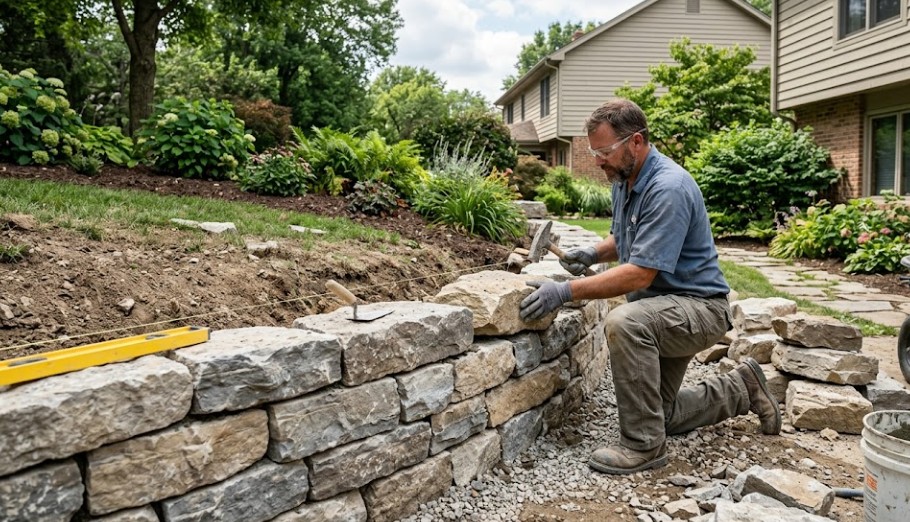
Real natural stone does not fade. It handles extreme heat and freezing rain without failing. Building with actual limestone or fieldstone requires a completely different skill set. A skilled stone mason cuts each piece by hand. We fit them together tightly so the wall supports its own weight. We do not just glue heavy things to a wall and hope they stick.
Footings Carry the Load
The structure above ground is only as good as the concrete below it. Heavy masonry requires a massive foundation. We dig deep below the frost line and pour steel-reinforced concrete.
If you skip the proper footing the wall will crack. It is guaranteed. The red clay will shift and snap the rigid mortar joints. Catching small cracks early saves you money. Read our [guide to foundation settlement signs] to learn what to look for around your property.
Fixing Bad Retaining Walls
Madison has a lot of rolling hills. If your yard slopes you probably have a retaining wall holding the earth back. Many builders use cheap timber or dry-stacked landscape blocks. Those materials fail quickly. Wet soil exerts massive hydrostatic pressure on a wall.
Timber rots in the humidity. Landscape blocks push forward and lean toward your driveway.
We build structural retaining walls. We lay concrete block and fill the cores with rebar and grout. We then face the entire structure with real rock. The water behind the wall is the real enemy. We install proper drainage systems behind every wall we build. A dry wall stays standing. A wet wall eventually falls over.
Restoring Historic Properties
If you own a property near downtown Madison you have to follow strict rules. You cannot throw modern materials on an old building. The local preservation boards want to keep the historical aesthetic intact.
Older buildings use softer brick and native stone. The original builders used lime-based mortar. Modern Portland cement is incredibly hard. If you patch an old wall with modern cement it will crush the original masonry when the building shifts. We test the existing mortar and match the compressive strength exactly. The new joint blends in and protects the old materials.
Matching Materials for Home Additions
Adding a new wing or a detached garage requires matching the original house. This is harder than it sounds. You cannot just order the same name brand of stone and expect it to look identical. Quarries change over time. The rock they pulled out of the ground ten years ago looks different from the rock they pull today.
We spend a lot of time sourcing the right materials. We tint the mortar so it matches the weathered joints on your existing exterior. You want the new structure to look like it was built at the exact same time as the main house. A neighborhood HOA will reject a mismatched facade instantly. We handle those details so you avoid violation letters.
The Danger of Sealing Natural Rock
Contractors often try to sell you a waterproofing sealer for your exterior masonry. They claim it protects the wall from rain. This is almost always a bad idea. Natural stone and traditional mortar are highly porous. They absorb water and they breathe it back out when the sun hits the wall.
If you apply a thick film-forming sealer you trap moisture inside the structure. The water finds a way in through tiny hairline cracks. It cannot evaporate out. The trapped moisture causes the mortar to rot from the inside. It damages the wood framing behind the veneer. Let the materials breathe the way they were designed to.
Outdoor Fire Features and Patios
A flagstone patio changes how you use your backyard. It gives you a flat surface for furniture and a fire pit. Building it right takes planning.
We pitch the entire patio surface slightly away from your back door. You do not want heavy rain pooling against your foundation. You can read our [backyard drainage strategies] to see how we manage water flow.
- Choose natural flagstone for a rustic look
- Use tight-cut bluestone for clean lines
- Build solid stone sitting walls around the edge
You want a space that survives the weather. We pack the base with compacted gravel and sand so the surface drains naturally. If a single stone settles you just lift it up and add more sand.
Mailboxes and Neighborhood Entrances
A brick or stone mailbox is often the first thing people see when they pull into your driveway. A standard metal post rusts out after a few years. A heavy masonry mailbox stands forever.
We build these structures with a solid concrete core. Kids playing in the street or a careless delivery driver will knock over a cheap post. A proper stone column absorbs impact.
Many subdivisions in Madison need their entrance signs repaired. The original developers slap up a fancy sign to sell lots quickly. Ten years later the mortar falls apart. We rebuild neighborhood monuments so they look permanent. A good entrance makes the entire street look better. We match the existing rock profile perfectly so nobody knows a repair happened.
Fixing bad work costs more than doing it right the first time. Walk around your property and look at your walls. Call us when you need actual craftsmanship. We will evaluate the job and tell you exactly what it takes to build it to last.